Why the early morning matters more than we think
The alarm pierces the darkness at 4:15 AM. For a moment, Hasan considers hitting snooze. He could skip suhoor, sleep another hour, start the fast without eating. His body screams for more rest. But something deeper pulls him from bed.
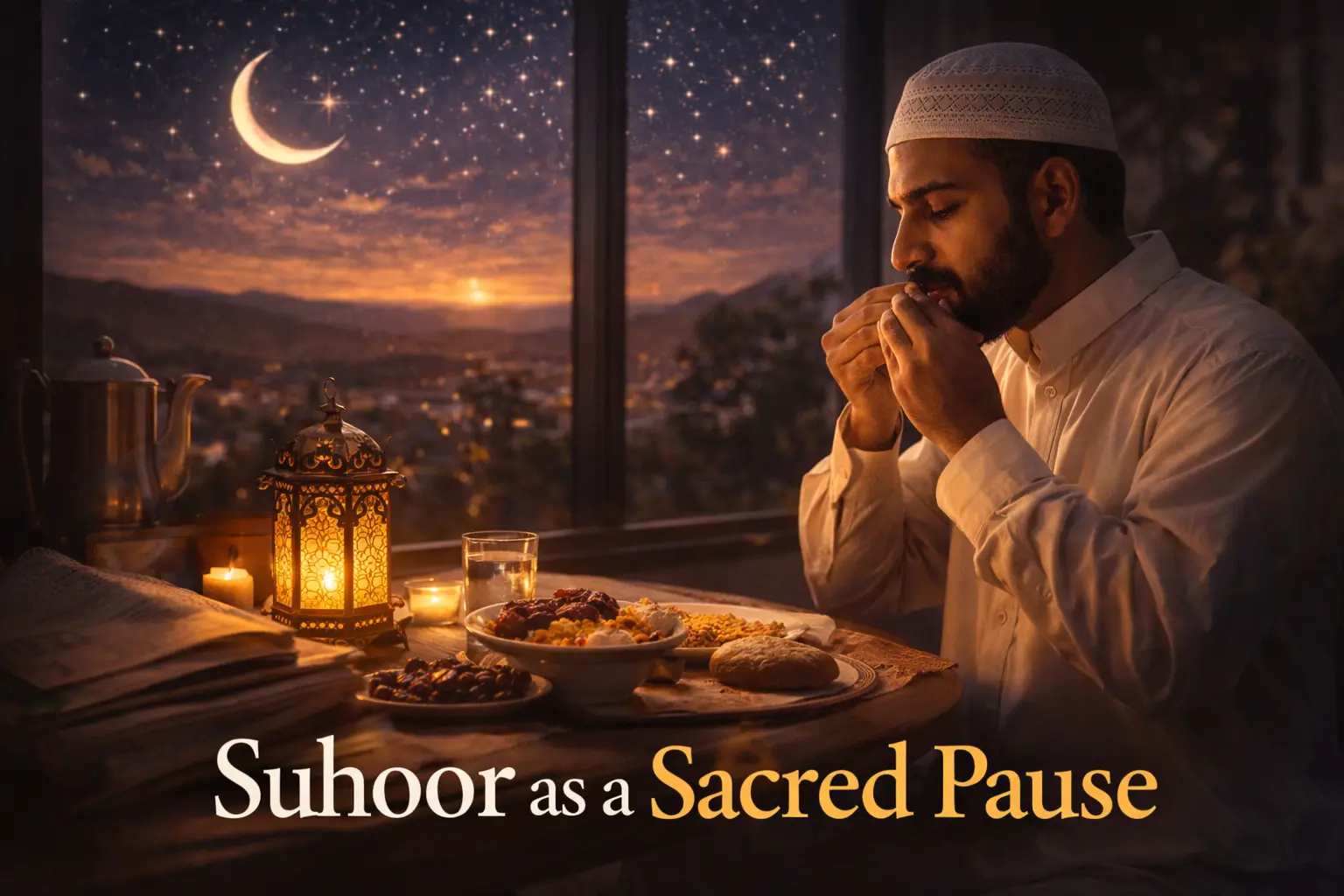
In the quiet kitchen, he moves slowly, heating leftovers, pouring water. The house is silent except for the hum of the refrigerator. Outside, the world sleeps. This moment, suspended between night and dawn, belongs to him and Allah alone.
He eats without hunger, drinks more water than he wants, knowing his body will need it later. But the food is almost beside the point. What matters is being awake when the world is still, sitting in stillness before the day’s chaos begins, marking the boundary between darkness and light with this simple act of eating.
This is suhoor. And it’s far more than a meal.
The Blessed Meal
The Prophet Muhammad, peace be upon him, emphasized suhoor repeatedly, calling it a blessed meal and encouraging believers to eat it even if just a few dates. There is barakah, blessing, in the pre-dawn meal. Not just practical blessing of having energy for the fast, but spiritual blessing in the act itself.
This blessing comes partly from timing. The hours before Fajr are when the barrier between heaven and earth feels thinnest, when duas are most likely to be accepted, when Allah descends to the lowest heaven asking if anyone is seeking forgiveness. Suhoor places Muslims in this sacred time, awake and conscious when most people are unconscious in sleep.
The meal becomes vehicle for worship that would happen regardless. Muslims wake for suhoor and, already awake, make Tahajjud prayer. They recite Quran in the stillness. They sit in dhikr as dawn approaches. They make dua while the rest of the city sleeps. What began as waking for food becomes opportunity for the deepest connection with the Divine.
The Intentional Wake
Suhoor is chosen wakefulness. Unlike Fajr prayer which is obligatory, suhoor is technically optional. Muslims could fast without it, sleeping straight through to dawn. But choosing to wake, to interrupt sleep for this meal, demonstrates commitment that Allah honors.
This choice matters spiritually. It’s easy to worship when you feel inspired, when emotions are high, when community carries you. It’s harder to drag yourself from warm bed into cold predawn darkness because it’s the right thing to do, because you committed to the fast, because you want the blessing even when your body wants sleep.
The discipline builds character. Day after day of choosing discomfort over comfort, waking when you’d rather sleep, trains the nafs (ego) to submit to what’s good rather than what’s easy. Suhoor becomes daily practice in self-mastery.
For many Muslims, this is the hardest part of Ramadan. Not the hunger during the day, which becomes routine after the first week. Not even the fatigue from disrupted sleep. But the moment when the alarm goes off in the dark and you must decide: will you get up or give in?
Every morning you choose to rise is small victory. Every suhoor eaten is act of devotion that no one sees but Allah. The private struggle in the dark becomes part of what makes Ramadan transformative.
Family in the Dark
Suhoor is often shared, families gathering in predawn quiet to eat together. These moments create memories that anchor Ramadan in children’s minds. The sleepy shuffle to the kitchen, the simple food, the togetherness in the dark, these become the images they carry forever.
Parents wake children gently, teaching them through example that this matters enough to interrupt sleep. Teenagers grumble but comply, learning that sometimes we do hard things not because we want to but because they’re worthwhile. Young children eat with parents, too young to fast but forming associations between the predawn meal and this special month.
The conversations at suhoor are different from those at iftar. At iftar, there’s celebration, abundance, and often guests. At suhoor, it’s just the family, quiet and intimate. Parents ask how children are managing the fast. Siblings talk softly about their days. Plans are made, concerns are shared, duas are requested.
These moments build family bonds through shared sacrifice and mutual support. Everyone is tired, everyone is making the same choice to be awake, and the collective commitment strengthens individual resolve.
For Muslims living alone, suhoor can feel isolating. Eating in silence at 4 AM with no one to share the moment highlights solitude. But some find beauty in the solo suhoor, the chance to sit with their own thoughts, to be present to themselves in a way that daytime busyness never allows.
The Liminal Hour
Suhoor occupies liminal space, between yesterday and today, between sleep and waking, between darkness and light. It’s threshold time when normal rules feel suspended, when the ordinary world hasn’t yet reasserted itself.
In this in-between hour, spiritual work happens more easily. The mind is quiet, not yet filled with the day’s concerns. Distractions are minimal. The phone isn’t buzzing. No one needs anything from you. You’re alone with Allah in a way that afternoon worship, surrounded by life’s noise, rarely allows.
Many Muslims use this time for Quran recitation, finding that verses absorbed in predawn stillness stay with them throughout the day. Others sit in meditation, in conscious presence, in simple awareness of being alive and awake while the world sleeps. Still others write, journal, or reflect, using the quiet to process what’s happening internally during this month of transformation.
The liminal quality of suhoor makes it powerful for intention-setting. Muslims use these moments to remind themselves why they’re fasting, what they hope to gain from Ramadan, how they want to be different by month’s end. The daily repetition of intention reinforces commitment when motivation flags.
Preparation for Absence
Suhoor is fundamentally about preparing for absence. You eat now because you won’t eat later. You drink because thirst is coming. The meal itself reminds you that deprivation is approaching, that the next fifteen hours will be empty of food and drink.
This awareness shapes how you eat. Suhoor isn’t about pleasure or satisfaction. It’s functional, strategic, sometimes even unpleasant, forcing food down when you’re not hungry because you know future need. The mild discomfort of eating without appetite prepares you for the greater discomfort of not eating when appetite returns.
But preparation for physical absence creates space for spiritual presence. The hours empty of food become hours full of consciousness about the fast, about dependence on Allah, about gratitude for provisions usually taken for granted. Suhoor marks the beginning of chosen emptiness that becomes vehicle for fullness of another kind.
The Community Unseen
When you wake for suhoor, you’re joining an invisible global community. Millions of Muslims worldwide are awake at the same liminal hour, eating the same meal, making the same commitment. You can’t see them, but knowing they exist creates connection across distance.
In Muslim-majority countries, the predawn hours during Ramadan come alive. Streets fill with people heading to or from suhoor. Restaurants stay open. The call to Fajr echoes from multiple mosques. The collective observance is visible and communal.
In America, especially outside major cities, suhoor is often solitary. You’re the only house with lights on at 4 AM. Your neighbors are asleep. The street is empty. But you’re still part of that global community, still connected to Muslims in every time zone beginning their fasts.
This awareness of unseen community sustains some Muslims through the lonely predawn meal. They’re not alone even when physically isolated. They’re part of something vast, connected to Muslims past and present through this simple act of waking and eating before dawn.
When Suhoor Becomes Routine
The danger is that suhoor becomes mechanical, automatic action without conscious intention. You wake, you eat, you sleep again or start your day, but the sacred pause becomes just another thing to check off.
This happens especially in Ramadan’s middle weeks when initial enthusiasm has faded but the end isn’t yet in sight. Suhoor becomes burden, interruption to sleep you desperately need, chore rather than opportunity.
Fighting this requires intentional mindfulness. Pausing before eating to remember why you’re doing this. Taking a moment of gratitude for the food, for the ability to fast, for another day of Ramadan. Making at least brief dua or dhikr before rushing back to bed or into the day.
Some Muslims use suhoor as anchor for consistency in worship. They commit to reading one page of Quran at every suhoor, or making dua for specific people, or reflecting on one divine name. The simple routine transforms the meal into spiritual practice that accumulates over the month.
The Last Suhoor
On the final morning of Ramadan, suhoor carries particular poignancy. This is the last predawn meal for a year. Tomorrow you’ll sleep through this hour. The month is ending, this pattern is breaking, the sacred pause is concluding.
Many Muslims approach the last suhoor with special intention, staying awake longer, praying more, savoring the moment they’ve taken for granted on earlier mornings. They feel the loss approaching, the return to normal sleep and regular eating that will feel both relieving and diminishing.
The last suhoor often includes dua that the next Ramadan arrives to find you better than you are now, that you live to see it, that the month’s blessings endure beyond its days. It’s looking back with gratitude and forward with hope, acknowledging that this gift of time was temporary and precious.
More Than a Meal
Suhoor is preparation, yes. It’s fuel for the body, strategy for managing the fast. But it’s also prayer without words, worship through the simple act of waking, sacred pause in the rush of life.
The blessing of suhoor isn’t primarily in the food. It’s in the choice to wake. In the stillness found. In the family gathered. In the intention renewed. In the connection to unseen community. In the liminal space between darkness and dawn where transformation becomes possible.
When Hasan finishes eating, he doesn’t immediately return to bed. He sits for a moment in the quiet kitchen, aware of the gift this hour represents. Somewhere the sun is rising. Soon Fajr will call. The day will begin, the fast will continue, life will rush forward.
But right now, in this sacred pause, there’s only stillness, gratitude, and presence. This is suhoor. This is why the early morning matters more than we think.