
Resisting excess and reclaiming simplicity
Nadia scrolls through Instagram as maghrib approaches. Her feed is a parade of elaborate iftar spreads: color-coordinated table settings, professionally photographed food arrangements, decorative lanterns and fresh flowers. Twelve different dishes on fine china. Aesthetic perfection designed for maximum likes.
She looks at her own table. Leftover lentil soup. Store-bought samosas. Dates and water. Three dishes, paper plates, mismatched glasses. It looks exactly like what it is: a tired working mother feeding her family after a long day of fasting.
The comparison stings. Should she be doing more? Is her iftar inadequate? Has she failed at Ramadan because her table isn’t Instagram-worthy?
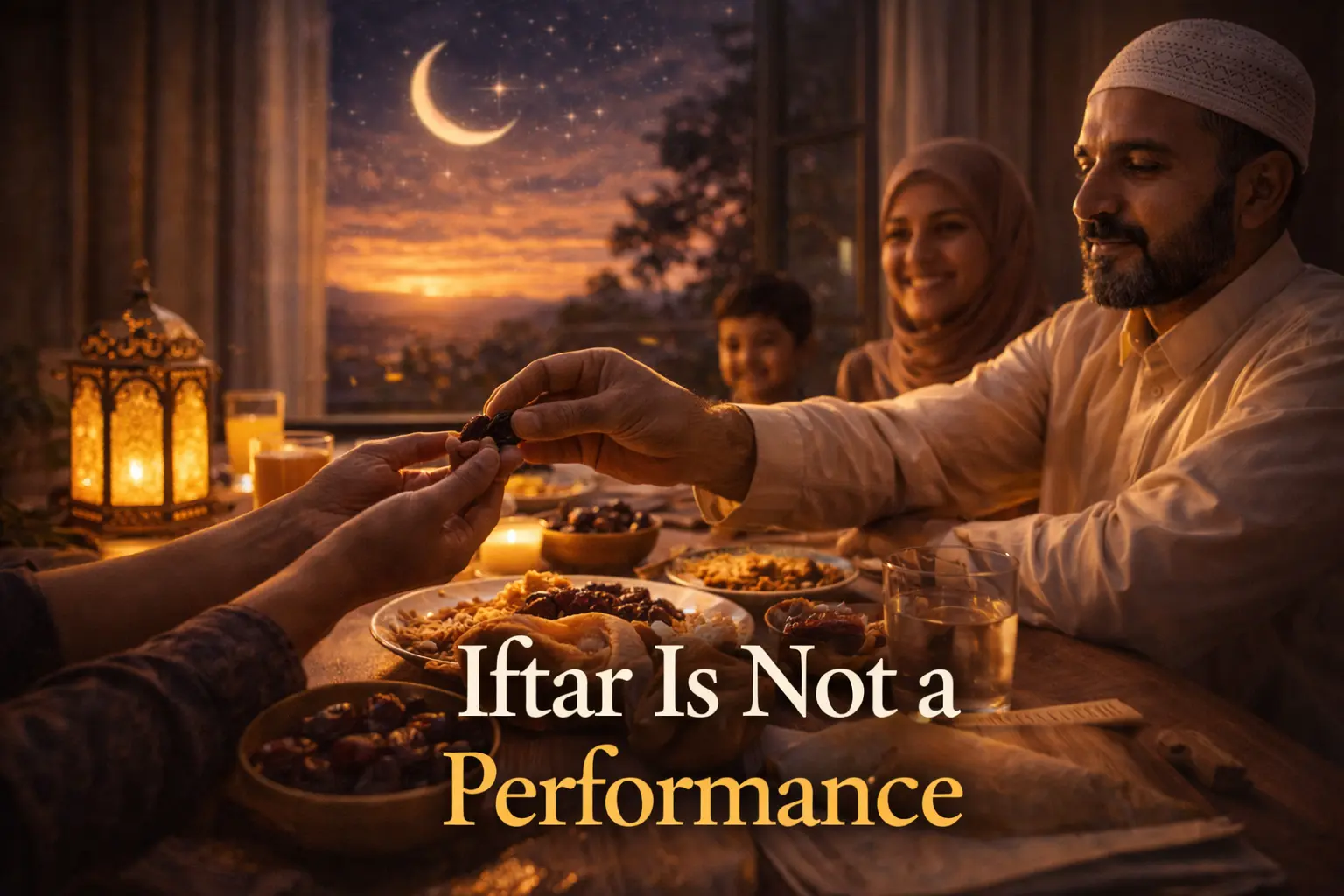
Then the adhan calls and she breaks her fast with a date, drinks water, and feels gratitude flood through her. The simple food tastes extraordinary. Her children eat happily. Her husband makes dua thanking Allah for provision. In this moment, the performance of iftar vanishes and what remains is its essence: breaking hunger with gratitude, sharing food with loved ones, pausing to acknowledge dependence on divine provision.
This is the iftar Ramadan asks for. Not the one social media sells.
When Breaking Fast Became Production
Iftar, the meal that breaks the daily fast, was never meant to be elaborate. The Prophetic example is strikingly simple: dates, water, perhaps milk or a light soup, enough to gently break the fast before standing for maghrib prayer. The substantial meal came later, after prayer, when the stomach had time to adjust.
This simplicity served multiple purposes. It prevented the shock of heavy food on an empty stomach. It allowed Muslims to pray maghrib promptly without being weighed down by overeating. It kept the focus on gratitude rather than indulgence. And practically, it meant iftar preparation didn’t consume the day, leaving time for worship and rest.
Somewhere along the way, especially in diaspora communities and among those with resources, iftar became something else entirely. It became opportunity to showcase hospitality, to demonstrate cultural pride through traditional dishes, to create memorable family moments. The meal expanded from functional fast-breaking to elaborate feast.
Social media accelerated this transformation. Iftar tables became content, optimized for likes and shares. The aesthetic dimension, how beautiful the table looks, became as important as how the food tastes. Ramadan decor emerged as an industry. The pressure to create perfect iftar experiences intensified.
The intentions behind this aren’t necessarily bad. Muslims want to honor the blessed month, to create special memories, to share abundance with family and community. But when iftar becomes performance, when the focus shifts from gratitude to display, something essential gets lost.
The Exhaustion of Excess
The elaborate iftar creates its own problems. Someone, usually women, spends hours cooking. The day of fasting becomes day of food preparation, standing over stoves while hungry and tired, producing dishes that might be photographed more than eaten.
The labor undermines the fast’s purpose. How can you focus on spiritual reflection when you’re frantically cooking? How can you rest and worship when you’re managing complex meal production? The irony is cruel: women fast all day then work exhaustedly to produce feasts they’re too tired to enjoy.
The excess also creates waste. Eyes bigger than stomachs, families prepare quantities of food that exceed what they can eat. Leftovers accumulate in refrigerators, often ending up discarded. In the month meant to teach restraint and empathy for the hungry, Muslims throw away food while others go without.
Financial pressure is another cost. Families feel obligated to maintain certain standards, to prepare special dishes, to host others. The expenses add up: special ingredients, decorations, disposable serving ware for large gatherings. Muslims spend hundreds or thousands on iftar when that money could feed the poor or contribute to charity.
The competition is subtle but real. Families compare iftars, noting who served what, whose table was more impressive. Children internalize the message that Ramadan success is measured by food abundance. The spiritual month becomes consumption contest.
And for what? The elaborate meal is eaten in minutes, often by people too hungry to really taste it. The Instagram photos get likes that mean nothing. The exhausted cook gets compliments that don’t compensate for the day spent in the kitchen rather than in worship.
Reclaiming Simple Iftar
The alternative isn’t joyless deprivation. It’s intentional simplicity that serves the fast’s purpose rather than undermining it.
Simple iftar starts with the sunnah: dates and water, perhaps some fruit or light soup. Break the fast gently, pray maghrib, then eat a regular modest meal. Not elaborate, not performative, just nourishing and sufficient.
This approach frees time for what Ramadan is actually about. Instead of cooking all day, the faster can rest, read Quran, make dua, reflect. Instead of being exhausted at iftar, they can be present, savoring the moment of breaking fast with full consciousness of the blessing.
It also demonstrates the fast’s lessons. All day you’ve refrained from eating. When eating becomes possible, restraint continues. You don’t overindulge just because you can. You eat moderately, with gratitude, acknowledging that sufficiency is different from excess.
Simple iftar creates space for presence. When the meal isn’t a production, when it’s just family eating together, conversation happens. People actually talk rather than just documenting food. Children engage with parents. The dinner table becomes what it should be: place of connection.
The financial savings matter too. Money not spent on elaborate iftar spreads can feed the hungry, support Islamic causes, or reduce financial stress on families already stretched thin. Simplicity becomes form of charity, redirecting resources from self to service.
Cultural Traditions Without Excess
Honoring cultural food traditions doesn’t require excess. Many Muslim cultures have special Ramadan dishes that carry deep meaning, that connect generations, that make the month feel distinct. These traditions deserve preservation.
The question is scale and intention. Making your grandmother’s special soup recipe honors heritage. Preparing twelve elaborate dishes because that’s what you see others doing creates burden. The goal should be meaningful tradition, not impressive display.
Families can identify two or three special dishes that genuinely matter to them, that carry memory and meaning, and prepare those with intention. The rest of the meal can be simple, functional, adequate. This balances cultural preservation with sustainable practice.
Community iftars at mosques can model simplicity. Instead of competing to sponsor the most lavish iftar, communities can establish standards: dates and water for breaking fast, simple shared meal after maghrib. The focus shifts from food to fellowship, from abundance to sufficiency.
When hosting others, generosity doesn’t require elaborate cooking. What guests need is welcome, not performance. Sharing whatever you have, even if simple, fulfills hospitality’s spirit better than stressed-out efforts to impress.
Teaching Children True Values
The iftar parents model teaches children what Ramadan means. When children see elaborate preparations and food-centered celebrations, they learn that Ramadan is about special meals and festive occasions. When they see simple, grateful breaking of fasts, they learn different lessons.
Simple iftar teaches that less is enough, that we don’t need abundance to be satisfied. It demonstrates that Ramadan is about restraint, not just during the fast but in how we break it. It shows that gratitude comes from recognizing blessing, not from having impressive spread.
Children who grow up with modest iftars don’t feel deprived if parents explain the why. They understand that the point is connection with Allah and family, not Instagram-worthy food displays. They learn to find joy in simplicity rather than requiring constant stimulation and excess.
These lessons serve them throughout life. Children raised to appreciate simple iftar develop healthier relationships with food, with consumption, with what constitutes special occasions. They’re less susceptible to social media pressure to perform their lives for others’ approval.
The Spiritual Reset
Simple iftar can itself be spiritual practice. The restraint honors the fast you just completed. The gratitude for basic food mirrors gratitude for all provisions. The choice of less when you could have more demonstrates the self-mastery Ramadan is meant to develop.
Breaking fast becomes moment of consciousness rather than unconsciousness. Instead of mindlessly consuming, you pause. You remember the hunger you felt, the thirst you endured. You recognize that this date and water are gifts. You feel genuine thankfulness rather than performing it.
This consciousness extends the fast’s benefits. All day you’ve practiced restraint and awareness. Simple iftar continues that practice rather than undoing it. The spiritual work doesn’t end at maghrib but continues through how you eat, how much, with what attitude.
Some Muslims use the moment of breaking fast for special intention. They make dua while eating the first date, believing duas at this moment are particularly accepted. They can’t do this while frantically managing elaborate meal service, but they can when iftar is simple and present.
Community Pressure and Individual Choice
The hardest part of choosing simple iftar is often community pressure. Extended family expects certain dishes. Friends post their elaborate spreads. The comparison is inevitable and sometimes painful.
But individual families can make different choices. You can politely decline to participate in iftar competitions. You can explain to extended family that you’re simplifying this year. You can unfollow social media accounts that make you feel inadequate.
You can also find or create community with others who share your values. Connect with Muslims who appreciate simple iftar, who support each other in resisting excess. Build accountability with friends who won’t judge your paper plates and basic food.
Sometimes this means disappointing others. Relatives might criticize your simple table. Children might complain that their friends have more elaborate iftars. These are real costs, but they’re worth paying for practices that serve your family’s spiritual health.
The Prophet’s Example
When in doubt, return to the Prophetic model. The Prophet Muhammad, peace be upon him, broke his fast simply. He didn’t judge others’ tables or criticize their food. He ate what was offered with gratitude and didn’t burden himself or others with expectations of elaborate meals.
He taught that the faster has two moments of joy: when breaking fast and when meeting Allah. The first joy is in the simple act of eating and drinking after abstinence, not in the quality or quantity of food. The second joy is in the reward earned through fasting. Neither requires performance or excess.
Following this example doesn’t mean historical reenactment. It means extracting the principle: iftar is about breaking hunger with gratitude, not about impressing others or indulging after restraint. The specifics can vary, but the spirit should remain.
Beginning Again
Nadia closes Instagram and sits at her modest table. Her children gather, her husband makes dua, and at the sound of adhan they break their fasts. The lentil soup tastes warm and comforting. The samosas are crispy and satisfying. The dates are sweet.
No one is photographing this meal. No one will praise its presentation. But everyone is present, grateful, and nourished. The fast is broken, the hunger ended, the blessing received.
This is enough. This is, in fact, everything. And in choosing this simplicity, Nadia has reclaimed iftar from performance and returned it to purpose: a moment of gratitude, a meal of sufficiency, a practice of restraint that honors the fast just completed.
Iftar is not a performance. It’s a prayer of thanksgiving made tangible in dates and water, in simple food and grateful hearts. And when we remember this, we free ourselves from the exhausting obligation to impress and return to the beautiful simplicity of just being fed.