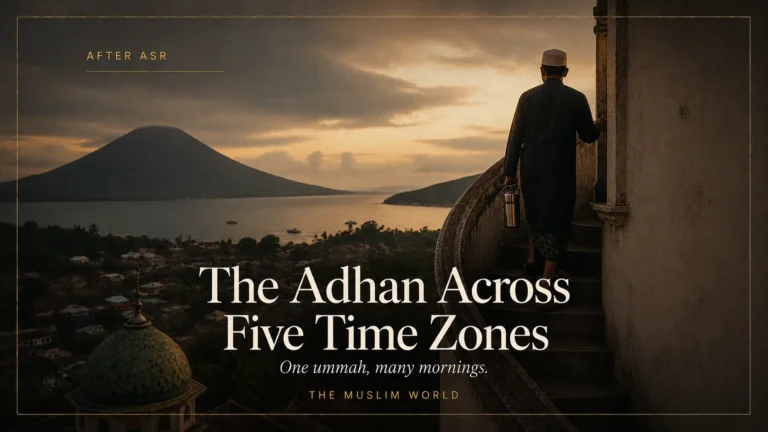
The call to prayer echoes from a smartphone in a Brooklyn apartment. A hijabi software engineer leads a standup meeting in Silicon Valley. A father rushes from the construction site to make it to his daughter’s basketball game, still dusty from the day’s work. These are the everyday moments that define what it means to be Muslim in America today, a reality far more textured and complex than any single narrative can capture.
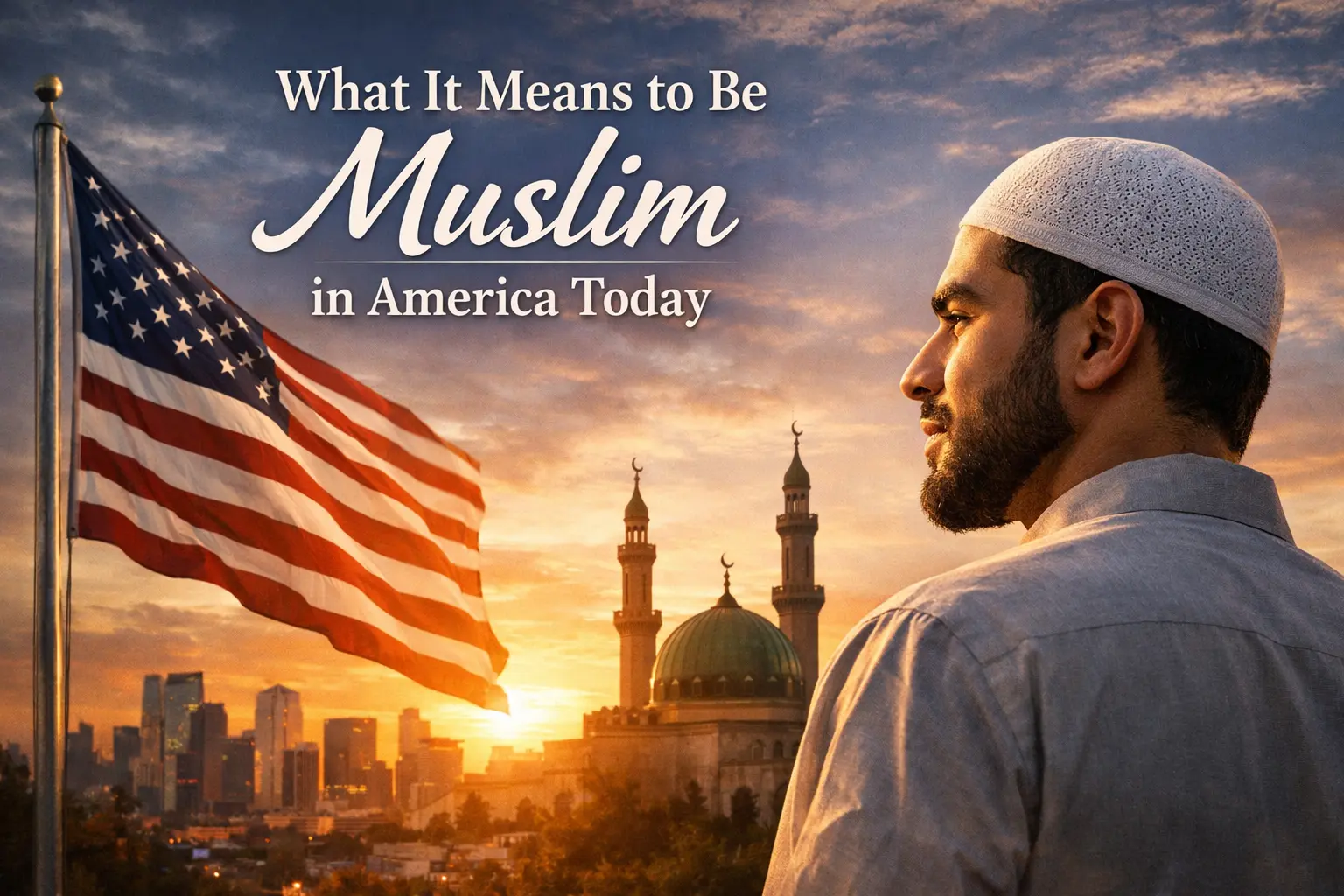
To be Muslim in America in 2026 is to inhabit a space of profound duality. It is to carry the weight of representation while insisting on the right to simply exist. It is to navigate a society that often views your faith through the lens of geopolitics while you’re trying to figure out if the meat at the office potluck is halal. The Muslim American experience is not monolithic, it never has been, but certain threads weave through our collective story, binding us in shared understanding even as our individual paths diverge.
Living Between Worlds
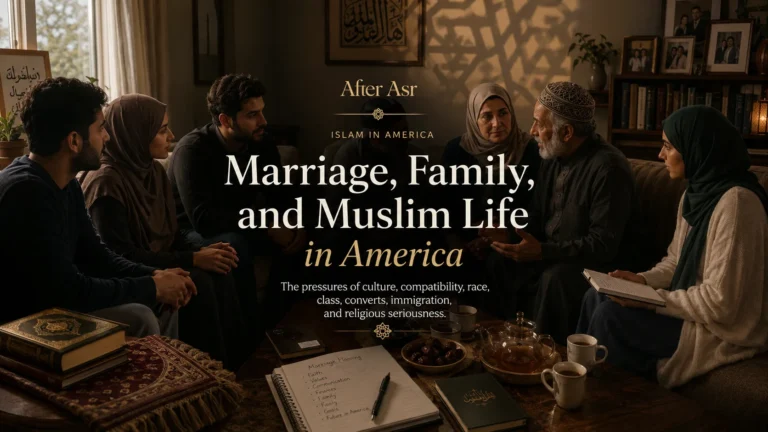
For many Muslims in America, identity is not a fixed point but a constant negotiation. Second and third generation Muslim Americans grow up speaking English as their first language, supporting local sports teams, and eating foods their parents never encountered in their countries of origin. Yet they also fast during Ramadan, pray five times a day, and maintain connections to cultures and traditions that predate their American citizenship by centuries.
This is not a contradiction. It is an expansion. The daughter of Pakistani immigrants who became a civil rights lawyer is no less American for wearing hijab, and no less Pakistani for speaking with a California accent. The Black American Muslim whose family has been in this country for generations carries both the legacy of slavery and the liberation found in Islam. The Arab American student organizing protests for Palestine while majoring in biochemistry contains multitudes that refuse simple categorization.
What makes this experience distinctly American is the freedom to define ourselves on our own terms. Despite the challenges, despite the discrimination and the stereotypes, there exists here a space to be unapologetically Muslim while forging new traditions that honor both faith and citizenship. Muslim American culture is its own thing now: the Islamic schools where kids play basketball during lunch, the halal carts that have become part of urban food culture, the Muslim comedians and artists who are redefining American entertainment.
The Weight of Visibility
Yet visibility comes with a price. Every headline about terrorism, every political speech that others Muslims, every airport security line that seems to take just a little longer adds another layer of exhaustion to the experience. Muslim Americans are perpetually asked to condemn, to explain, to justify. We are expected to be ambassadors for 1.8 billion people we’ve never met, spokespersons for a religion with 1,400 years of theological diversity and scholarly debate.
The sister wearing niqab at the grocery store knows that to some shoppers, she represents everything they fear about Islam. The brother with a beard has learned which neighborhoods to avoid, which conversations to stay quiet in. Muslim parents teach their children to be proud of their faith while also preparing them for the questions, the comments, the moments when they will be made to feel like outsiders in the only country they’ve ever known.
This hypervisibility affects our communities in tangible ways. Mosques install security cameras and hire guards. Muslim organizations spend resources combating misinformation instead of focusing solely on spiritual growth. Young Muslims curate their social media presence carefully, aware that their posts might one day be scrutinized, their words twisted into evidence of radicalization that never existed.
But visibility also creates opportunity. Muslim elected officials now serve in Congress, in state legislatures, in city councils across the country. Muslim athletes compete at the highest levels, sometimes pausing games for prayer. Muslim doctors, teachers, and activists are shaping American institutions from the inside. Our visibility, while burdensome, also allows us to challenge narratives and change perceptions through our mere presence.
Faith in the Marketplace of Ideas
America’s religious diversity offers Muslim Americans something precious: the ability to practice Islam freely while engaging with a plurality of beliefs and perspectives. This can be both liberating and challenging. Muslim students debate atheist professors in college classrooms. Muslim professionals work alongside colleagues who celebrate Christmas, Hanukkah, Diwali, and nothing at all. Muslim interfaith organizers build coalitions with churches and synagogues to address homelessness and food insecurity.
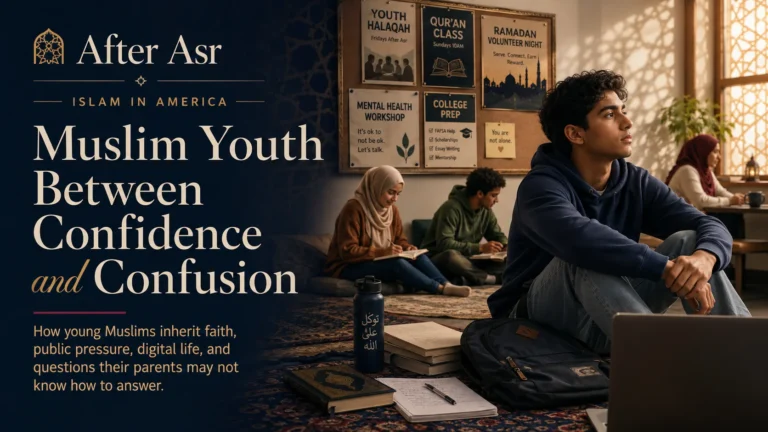
This engagement sharpens and deepens faith for many. When you must articulate why you pray, why you fast, why certain principles matter to you, Islam becomes not just inherited tradition but conscious practice. Young Muslims are reading the Quran with fresh eyes, seeking scholars who can address contemporary questions, building communities that reflect their values and their context.
At the same time, American individualism and consumerism present real challenges to communal religious practice. The masjid competes with weekend sports leagues and work obligations. The call to prayer meets the demands of the corporate calendar. Maintaining Islamic ethics in a society built on interest-based banking, exploitative labor practices, and relentless consumption requires constant vigilance and creativity.
Muslim communities are responding by building institutions that serve both spiritual and practical needs: schools that provide Islamic education alongside rigorous academics, community centers that offer youth programs and professional development, organizations that provide social services while maintaining religious identity. We are learning to be Muslim in America by creating spaces where faith and citizenship reinforce rather than contradict each other.
The Next Chapter
What does it mean to be Muslim in America today? It means waking up for fajr in a country that doesn’t pause for prayer. It means explaining Ramadan to coworkers who genuinely want to understand. It means watching your children navigate challenges you never faced while drawing on faith traditions you hope to pass on. It means fighting Islamophobia while refusing to let fear define you. It means contributing to American society as doctors, artists, teachers, and entrepreneurs while maintaining the practices and principles that make you Muslim.
It means recognizing that Muslim American identity is still being written, still being defined, still being lived into existence by millions of people making daily choices about how to honor both their faith and their citizenship. The Muslim American experience is not about choosing between two identities but about embracing the fullness of who we are.
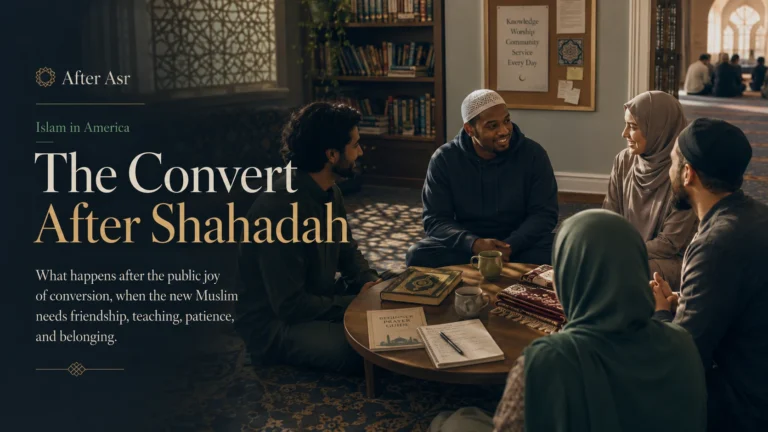
We are the halal food truck owner saving to perform Hajj. We are the emergency room nurse breaking fast with dates between patients. We are the college student organizing for Palestine while studying for organic chemistry. We are the grandmother teaching Quranic Arabic to grandchildren who dream in English. We are the converts finding family in the ummah. We are the refugees building new lives. We are the descendants of enslaved Africans reclaiming Islamic heritage.
To be Muslim in America today is to carry hope alongside hurt, to build community in the face of alienation, to practice faith in a land that promises religious freedom while sometimes failing to deliver it. It is to insist on belonging even when told you don’t, to contribute even when your contributions are ignored, to pray even when the world seems deaf to prayer.
It is to wake up each day and choose faith, choose action, choose presence. It is to understand that being Muslim in America means writing yourself into a story that tried to exclude you, claiming space that was always rightfully yours, and creating a future where the next generation won’t have to fight quite so hard to simply be.
This is what it means to be Muslim in America today. And tomorrow, insha’Allah, we’ll wake up and do it all again.