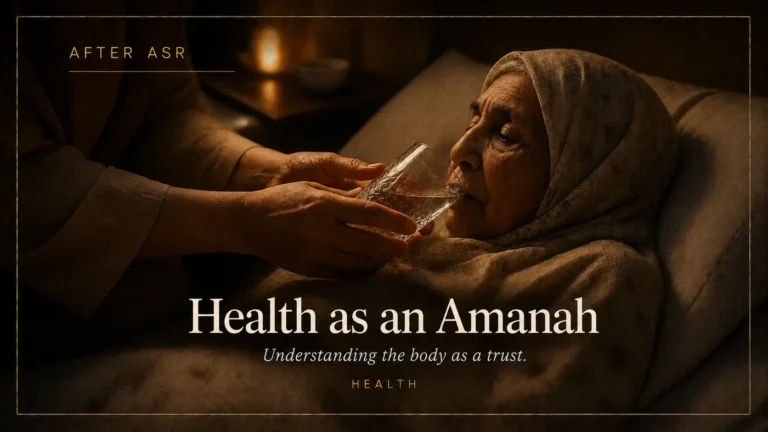
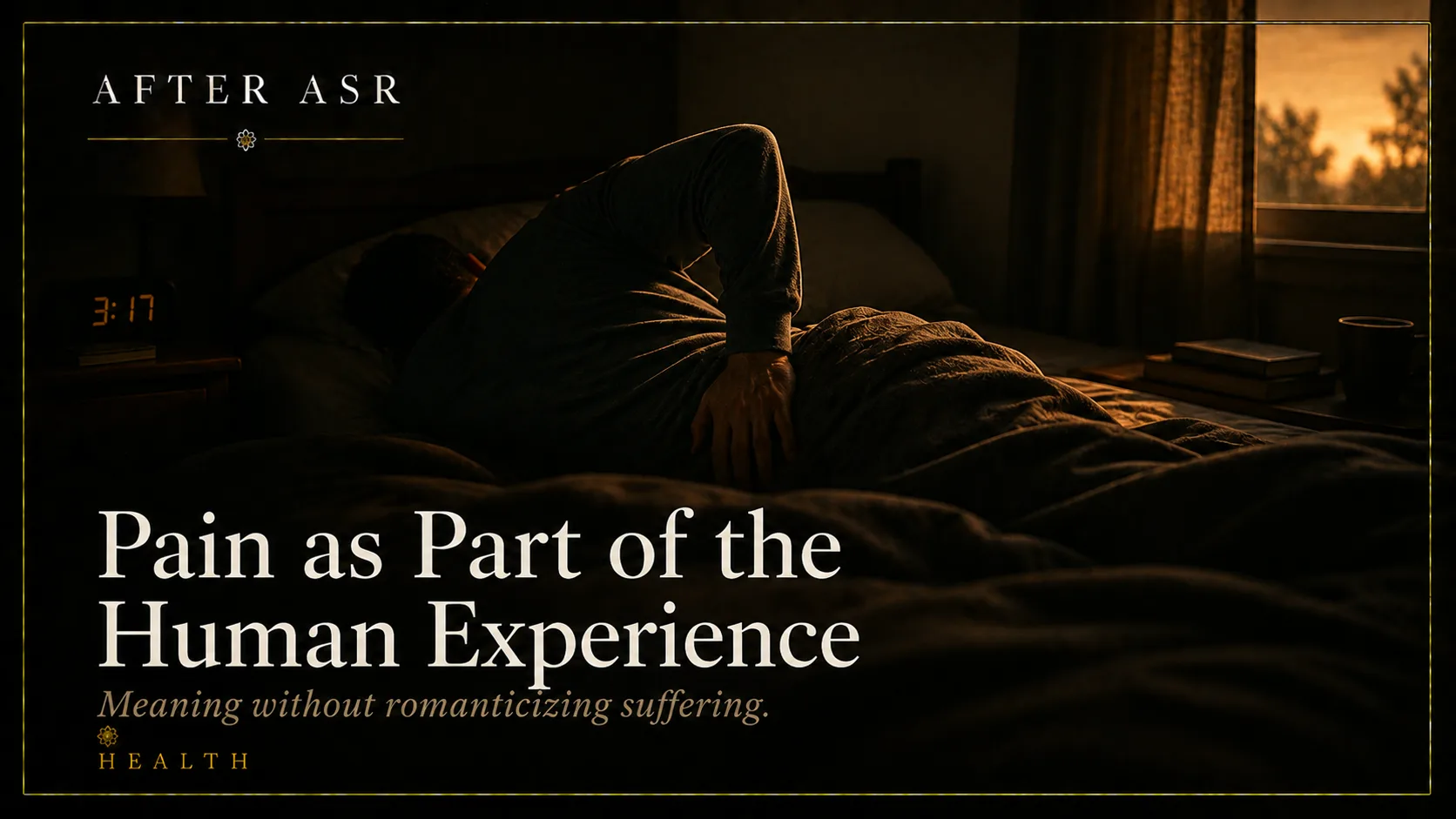
It wakes her at three in the morning, the pain in her lower back, the same pain that has visited for years since the children were small and always carried. She lies still, breathing carefully around it, waiting for it to let her shift. The house is dark and quiet. There is only her and the pain, and the long hours before the light.
Everyone who lives long enough comes, eventually, to a night like this. Pain is the one appointment none of us will miss.
Pain Is Universal and Lonely
Pain is the most common human experience and the most isolating. Everyone has felt it, everyone will feel it, and yet in the moment of it we are utterly alone. No one can feel your pain for you or fully with you. It happens inside a single body, incommunicable, sealed off from even the people who love us most. We are united by the fact of pain and separated by the experience of it.
This is part of what makes pain so hard. It is not only that it hurts, but that it cannot be shared, cannot be truly shown to another, cannot be lifted off and handed to willing hands. The person in pain is in a country no one else can enter. We may sit beside them, love them, tend them, but we cannot cross over. Pain is the loneliest thing the body does, and knowing that everyone visits the same lonely country is a thin comfort at three in the morning.
Pain Demands to Be Felt
Pain does not ask permission. It insists. It takes over the whole field of attention, crowds out every other thought, reduces the vast world to the single throbbing point of the body that hurts. You cannot reason with it, cannot think it away, cannot decide to attend to something else. Pain is the body’s most forceful speech, and it will be heard.
There is a purpose in this insistence, at least for pain that warns. The searing that pulls the hand from the fire, the ache that keeps us off the injured foot, these are mercies disguised as torment, the body forcing us to protect it. Pain that could be ignored would fail at its job. But the same insistence that saves us becomes a torment when the pain outlasts its usefulness, when it goes on demanding to be felt long after its warning has been received. Then the very forcefulness that once protected us turns into the thing we most need relief from.
We Try to Rush Past It
Our first instinct with pain is to make it stop, immediately, by any means. This is right and human; no one should be asked to suffer needlessly. But we have developed a low tolerance for any pain at all, a reflex to numb the smallest discomfort before it has even spoken, to reach for relief the instant anything aches. We want a life with no pain in it, and we are frustrated that the body will not provide one.
There is a cost to this rush. When we numb every pain instantly, we sometimes silence a message the body needed us to hear. And we lose, too, our capacity to bear the unavoidable pains that no numbing can reach. A life organized around the elimination of all discomfort is a life poorly prepared for the pains that cannot be eliminated, and there will be some. This is not an argument for suffering unnecessarily. It is a caution against the fantasy that we can, or should, feel nothing difficult ever. The body was not built for a life without pain, and neither, in the end, were we.
Two Ways to Get Pain Wrong
There are two errors we make about pain, opposite to each other, and both do harm. The first is to dismiss it, to wave it away as nothing, to tell the suffering to toughen up, to treat pain as weakness or complaint. The second is to glorify it, to make suffering noble in itself, to romanticize the pain of others into a beautiful spiritual lesson they should be grateful for. Both errors fail the person who actually hurts.
Between these two errors lies the honest place, and it is harder to occupy than either. It takes pain seriously without pretending it is good. It grants that pain is real and hard, worthy of relief and compassion, while refusing to dress it up as a gift the sufferer ought to want. Most of our clumsiness around pain comes from falling into one error or the other, minimizing what hurts or ennobling it. The truth is more uncomfortable and more useful. Pain is bad, it is real, and it can still, sometimes, carry meaning. Holding all three at once is the whole difficulty.
We Do Not Romanticize Suffering
I want to be firm about this, because the temptation runs deep in religious people especially. We must not romanticize suffering. We must not tell the person in pain that their agony is beautiful, that their illness is a blessing in disguise, that they should be grateful for the trial. Whatever truth may hide in such words, they are not ours to say to another’s pain, and in the mouth of the comfortable they become a cruelty.
Suffering is not good. Pain is not a thing to be wished for or celebrated. The tradition that speaks of reward in hardship never asks us to pretend the hardship is pleasant, and it certainly never licenses the well to lecture the suffering about the gifts of their pain. When we romanticize suffering, we abandon the sufferer, hiding our helplessness behind pretty words that ask them to perform a gratitude they do not feel. Real compassion does not decorate pain. It sits with it, honestly, and calls it what it is.
And We Do Not Empty It of Meaning
And yet we need not go to the other extreme and declare pain utterly meaningless, mere malfunction signifying nothing. Our tradition offers something between celebration and emptiness. It teaches that the believer is not struck by so much as a thorn without some expiation, some raising of rank, some good drawn from the hardship by a wisdom we cannot see. This is not a claim that pain is good. It is a claim that pain is not wasted.
There is a great difference between saying suffering is beautiful and saying suffering is not meaningless, and the difference matters enormously to the one who hurts. To the sufferer, the possibility that their pain is seen, counted, and somehow turned toward good can be a genuine consolation, held quietly in their own heart. But it is theirs to hold, not ours to impose. Meaning does not make the pain hurt less. It only keeps the pain from being pure void. That is not nothing, at three in the morning.
Pain Can Soften a Heart
Something happens to a person through pain, and it is not always destruction. Pain can harden a heart, turning it bitter and closed. But it can also soften one, opening it to a tenderness it did not have before. The person who has suffered often carries a gentleness toward the suffering of others, a patience, a refusal to judge, that the untouched rarely possess. Pain can teach compassion as nothing else does.
I do not say this to justify the pain. The softening is not worth the suffering; no one would choose it. But when the pain comes anyway, as it does, unbidden and unwanted, the heart it opens is a real thing, and it can be received without pretending the pain was a gift. Many of the kindest people I have known were made kind by what they endured. They would not thank their pain for it. But they carry its fruit all the same, and they use it to sit with others in the dark. That is meaning made from suffering, not suffering made beautiful.
Even the Prophets Felt Pain
It comforts me that the beloved of God were not spared pain. The prophets, peace be upon them, suffered, in body and in heart. Our own Prophet knew illness, knew grief, knew the death of his children, knew hunger and injury and the deep ache of loss. Job endured a suffering so severe it became the very name of patience. Being close to God did not exempt them from pain; if anything, they were tested more.
This matters, because pain tempts us to believe we are being punished, forsaken, singled out for our failures. The suffering of the prophets says otherwise. Pain is not a sign of God’s abandonment; it visited His most beloved servants. To hurt is not evidence that you have done wrong or that you are unloved. It is evidence that you are human, in the company of every human who came before, including the very best of them. The prophets felt pain and were not less beloved for it. Neither are you.
What Our Pain Teaches Us of Others
Our own pain is the school in which we learn the pain of others. Before we have suffered, we imagine we understand suffering; after, we actually do, from the inside, in a way that changes how we treat everyone who hurts. The person who has known real pain no longer tells the suffering to cheer up, no longer minimizes, no longer offers the easy words. They know better, because they have been there.
This is perhaps the truest use of our own suffering, that it equips us to be gentle with the suffering of others. The mother awake with her back pain understands, now, the neighbor kept up by her arthritis, the friend whose migraines steal whole days. Pain shared, even at a distance, even only in the knowing, builds a solidarity among the hurting that the comfortable cannot join. When your turn with pain comes, it enrolls you in a vast and gentle company. Let it make you kinder. That is the one good thing you can reliably take from it.
Relieve Pain Where You Can
None of this meaning-making cancels our duty to relieve pain, our own and others’. To seek relief from pain is not a failure of faith or patience. The Prophet, peace be upon him, urged the treatment of illness and the easing of suffering; he did not tell the sick to simply endure. Mercy toward pain, including the reaching for medicine and comfort, is woven through our tradition from the start.
So there is no contradiction between honoring the meaning pain may carry and working to end it. We hold both. We do not romanticize the pain into something we should keep; we relieve it wherever we can, for ourselves and for everyone in our care. To ease another’s suffering, to bring the medicine, the comfort, the warm meal, the steady presence, is among the highest of the mercies. The person who reduces the pain in the world is doing sacred work. Meaning is what we may find in the pain that cannot be relieved, never an excuse to leave relievable pain alone.
Do Not Explain Another’s Pain to Them
There is a particular unkindness worth naming. It is the habit of explaining other people’s pain to them, of telling the suffering why their suffering has come, what lesson it holds, what good God intends by it. We do this to soothe our own discomfort at their pain, but it lands on them as a burden, a demand to be grateful, a suggestion that their agony is somehow their curriculum.
Leave the explaining alone. The meaning of a person’s pain, if there is one, is between them and their Lord, discovered in their own heart in their own time, never handed down by a bystander. Our task at the side of the suffering is not to interpret their pain but to help them bear it. Say less. Offer presence, not analysis. The friends of Job made their great error precisely here, explaining his suffering to him, and God rebuked them for it. Do not repeat their mistake. The suffering do not need our theories. They need our company.
Sitting With the One in Pain
What the person in pain most needs is rarely our words and almost never our solutions. It is our presence. To sit with someone who hurts, to stay in the room, to not flee the discomfort of their suffering, is a gift greater than any advice. It says, you are not alone in this country, even if I cannot enter it, I will sit at its border and keep you company.
This is harder than it sounds. Pain makes the well uncomfortable; we want to fix it, to say something that helps, and failing that, we want to leave. But the one who stays, who brings the meal and sits quietly, who does not need the sufferer to be better before they will remain, offers the deepest comfort there is. We cannot take another’s pain. We can refuse to let them bear it alone. That refusal, that faithful staying, is one of the truest forms of love the body ever performs.
The Long Weight of Chronic Pain
Some pain does not pass. It settles in and stays, a daily companion for years, a weight carried with no promised end. Chronic pain is its own particular trial, harder in ways the acute cannot know, because it must be borne not once but every day, without the hope of a nearing finish. The person living with lasting pain performs a quiet, unseen heroism simply by continuing.
We owe these people a special gentleness, and a special humility. We cannot imagine their daily burden, and we should not pretend to. We must not grow impatient with a pain that does not resolve on our timeline, must not tire of their struggle, must not expect them to be inspiring or grateful or done with it. The person in chronic pain has already been more patient than we will ever be asked to be. Our part is to keep showing up, without weariness, for a suffering that does not end when our sympathy runs low. Faithful presence, over the long haul, is what they need most and receive least.
Meaning Is Made, Not Handed Over
If there is meaning to be found in pain, it is found by the sufferer, not delivered to them by anyone else. Meaning is not a label we can stick onto another’s agony from outside. It is something the person in pain may, over time, in their own heart, make from what they are enduring, or may not. Both are allowed. No one owes their pain a redemptive story.
This is why we must be patient and quiet at the side of suffering. The meaning, if it comes, comes slowly, privately, on the sufferer’s own terms, discovered rather than imposed. Some find that their pain deepened their faith, their compassion, their understanding of what matters. Others simply endure, and that too is enough; survival is not a lesser outcome than transformation. We do not grade the suffering on the meaning they extract. We let them make what they can of it, in their own time, and we help them live in the meanwhile.
The Mercy Pain Points Toward
In the end, pain points beyond itself. It reminds us that this world is not the place of perfect rest, that our bodies are on loan and will one day fail, that we were made for something the aching body only gestures toward. The very fact that pain feels wrong, that everything in us protests it, suggests that we were fashioned for a wholeness this life does not finally provide. Pain is homesickness the body cannot name.
Our faith holds out the promise of a place where there is no more pain, where the aching back and the sleepless night and the long chronic weight are all, at last, set down. This is not a reason to welcome suffering, but it is a reason to endure it with hope. The pain is real, and it is temporary, and it is pointing, all the while, toward a mercy that will one day answer it completely. That answer is not yet. But it is coming, and knowing it is coming is what lets us bear the night.
Before the Light
So she lies still in the dark, breathing around the pain, waiting for the hour when she can rise. The pain is real. She will not pretend it is a gift.
But she is not being punished, and she is not alone, and the pain is not wasted, and it will not last forever. These are not cures. They are companions for the long hours before the light.
You do not have to find your pain beautiful. You do not have to be grateful for it. You only have to bear it, gently, as the prophets did, until the morning comes. And it will come.