How American Muslims practice generosity in everyday life
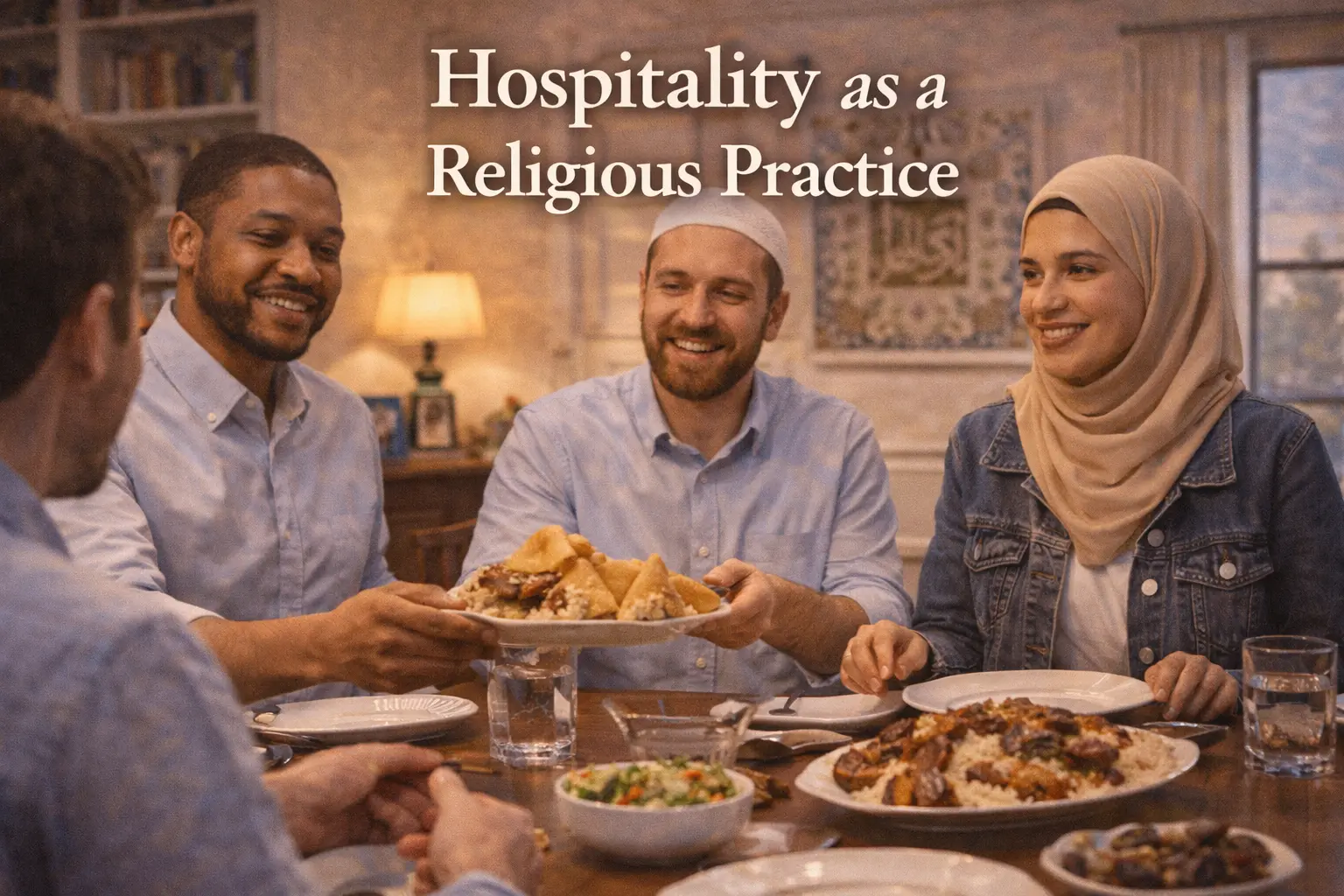
Amira’s doorbell rings at 7 PM. It’s her husband’s colleague from work, a non-Muslim who mentioned having a rough day. She hasn’t prepared extra food, but within minutes she’s setting another place at the table, pulling out leftovers from the fridge, brewing fresh tea. By 7:15, the guest is eating alongside the family, welcomed as if the visit had been planned for weeks.
This is Islamic hospitality in action. Not grand gestures or special occasions, but the reflexive welcome that opens doors and shares what you have, whether you’re expecting company or not.
For Muslims, hospitality is not optional nicety but religious obligation. The Prophet Muhammad, peace be upon him, said that whoever believes in Allah and the Last Day should honor their guest. Islamic tradition is filled with stories emphasizing generosity, from Prophet Ibrahim feeding strangers who turned out to be angels to the Ansar of Medina sharing their homes and resources with refugees from Mecca.
In America, these ancient principles take new forms. Muslim hospitality happens in suburban homes and city apartments, at mosque potlucks and community iftars, through food pantries and refugee resettlement work. It’s expressed in Arabic and English, Urdu and Somali, shaped by diverse cultural traditions but rooted in shared Islamic values.
Understanding how American Muslims practice hospitality reveals something essential about how faith shapes daily life, how religious principles translate into concrete action, and how generosity builds community in a society that often prizes individualism over collective care.
The Open Table
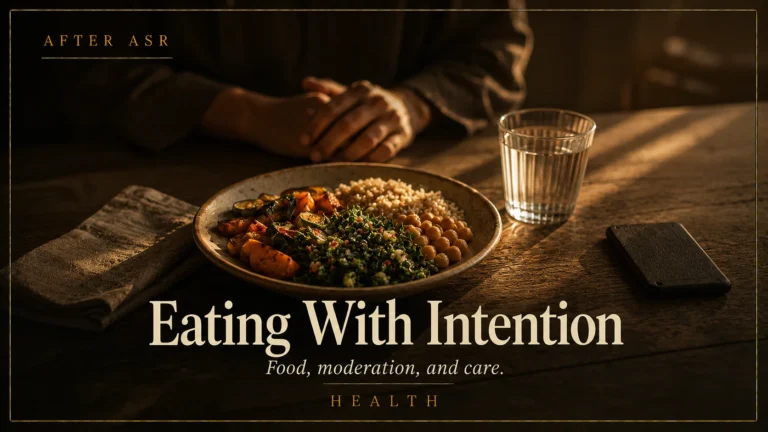
Food is the universal language of Muslim hospitality. When guests arrive, the first question is always whether they’ve eaten. The second is what they’d like to drink. Refusing food requires persistent insistence because the host’s obligation is to feed anyone who enters their home.
Muslim American homes keep pantries stocked partly for this reason. There’s always rice, always something to make quickly, always tea. The ability to produce a meal with little notice is point of pride. Mothers teach daughters to cook with the assumption that unexpected guests are normal, not exceptional.
The quantities are generous to the point of excess. Muslim hosts cook as if feeding twice the expected number, ensuring abundance. Plates are piled high, seconds are insisted upon, and leftovers are sent home with guests. The goal is not just to feed but to feed lavishly, to make guests feel honored through sheer abundance.
This can bewilder American guests accustomed to smaller portions and the option to decline additional food. They don’t realize that accepting generously is gift to the host, that eating well honors the offering. Muslim hosts learn to explain: please eat more, you’re doing me a favor, it makes me happy to see you enjoy the food.
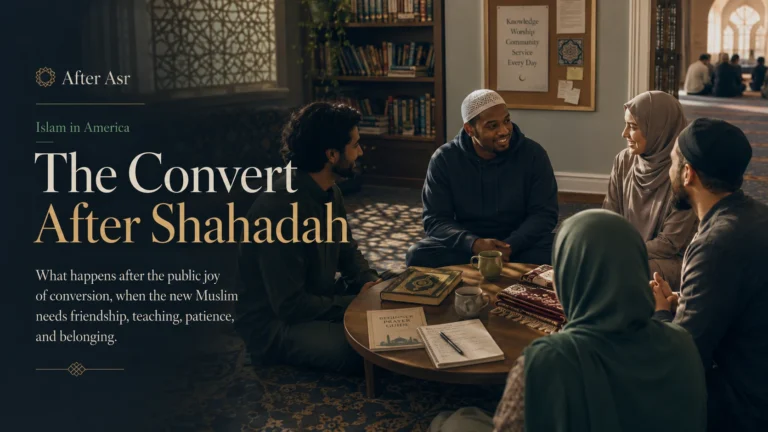
The table itself becomes sacred space where relationships form and deepen. Business associates become friends over shared meals. Neighbors who’ve never spoken connect over dinner invitations. Converts to Islam often cite the warmth of Muslim hospitality, the immediate inclusion in meals and gatherings, as crucial to feeling welcomed into the community.
Mosque as Community Kitchen
Nowhere is Muslim hospitality more visible than at mosques during Ramadan. Every evening at sunset, Muslims gather to break fast together. Tables overflow with dates, samosas, pakoras, biryani, and countless other dishes. Anyone who walks in, Muslim or not, is invited to eat.
This iftar tradition transforms mosques into community kitchens. Families sign up to sponsor nights, preparing enormous quantities of food. Others contribute dishes without being asked. The goal is ensuring no one breaks their fast alone, that everyone has more than enough, that abundance characterizes the holy month.
Weekend potlucks after Jumu’ah follow similar patterns. Every family brings something, usually too much, and everyone eats from the collective spread. The variety reflects the community’s diversity: Arab, South Asian, African, and American dishes side by side. Children run between tables while adults linger over tea, the meal creating space for community that the rushed prayers alone might not.
Mosques also practice hospitality beyond their own members. Many run food pantries open to anyone in need, regardless of faith. They serve Thanksgiving dinners for the homeless, organize meal deliveries for the elderly, and coordinate with other religious institutions to address food insecurity. The Islamic principle that feeding the hungry is paramount finds institutional expression.
Some mosques deliberately invite non-Muslim neighbors to iftars during Ramadan, using food as bridge across religious difference. These gatherings introduce people who might never otherwise enter a mosque, breaking down barriers through the universal connection of shared meals.
Welcoming the Stranger
Islamic hospitality particularly emphasizes caring for travelers and strangers. In Muslim-majority countries, travelers could historically find shelter and food at mosques and in homes along their routes. In America, this tradition continues in modified forms.
Muslim families hosting international students for the year, taking in converts who’ve been rejected by their families, opening homes to refugees who’ve just arrived, these are contemporary expressions of ancient practice. The hospitality isn’t temporary charity but integration into family life, treating guests as household members for as long as they need shelter.
When Muslims travel, they often connect with other Muslims in unfamiliar cities, staying in their homes, being fed and guided by strangers who become family simply through shared faith. These networks of hospitality create safety and belonging for Muslims navigating a country where they’re minorities, where halal food and prayer spaces aren’t guaranteed.
The principle extends to welcoming people into Islam itself. Converts often describe being immediately enveloped in hospitality, invited to meals, included in family gatherings, given clothes and Qurans and transportation. The generosity communicates that they’re not alone, that choosing Islam means joining a community ready to support them.
Generosity Beyond Food
Muslim hospitality extends beyond material provision to how people are treated, how time and attention are offered, how dignity is protected. Hospitality means listening without judgment, offering help without being asked, going out of your way to accommodate others’ needs.
It’s the Muslim doctor who stays late to see a patient who couldn’t get off work earlier. The Muslim teacher who provides school supplies from her own pocket for students who can’t afford them. The Muslim business owner who doesn’t charge the customer who’s short on cash. The neighbor who shovels snow from the elderly couple’s driveway without mentioning it.
These acts of generosity are understood as worship, as fulfilling religious obligation to care for others. The Prophet said that every act of kindness is charity, that even smiling at your brother is sadaqah. This broad definition of charity means almost any generous act can be religious practice.
Time itself becomes gift. Muslims sit with the sick, visit the lonely, attend funerals of people they barely knew, simply because presence matters. In American culture that prizes efficiency and busyness, this generous use of time for others’ benefit stands out. It says: you matter more than my schedule, your need for company outweighs my other obligations.
Teaching Through Practice
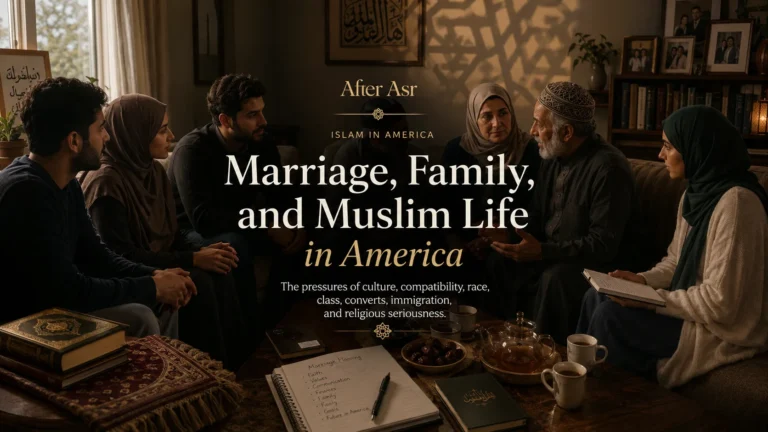
Muslim parents teach hospitality by example, letting children see doors opened and meals shared, learning that this is simply how Muslims live. Children grow up watching their parents stop everything to welcome guests, seeing resources stretched to accommodate others, understanding that generosity is non-negotiable.
These lessons shape character. Muslim children learn that you share what you have even when it’s not convenient, that strangers deserve dignified treatment, that your home belongs to the community not just your family. They internalize that hoarding is shameful and generosity is virtue.
Some families make children participate in hospitality directly, having them help cook for guests, serve food, clean up afterward. Others take children to volunteer at food banks or visit elderly community members. The goal is making generosity habitual, reflexive, the default response to encountering others’ needs.
The Limits and Tensions
American Muslim hospitality isn’t without tensions. The emphasis on abundance can strain budgets, particularly for working-class families trying to maintain middle-class hospitality standards. The obligation to receive guests can conflict with needs for privacy or rest. The cultural expectation of certain foods or styles of hosting can burden women especially, who often bear primary responsibility for hospitality work.
Some younger Muslims push back against hospitality practices they see as performative or excessive, questioning whether elaborate meals are necessary or whether simpler generosity might be more authentic. Others struggle with how to maintain generous hospitality while respecting boundaries and self-care.
The COVID-19 pandemic forced reconsideration of hospitality practices built on physical gathering and shared food. Muslims adapted, finding new ways to be generous while protecting health, but the tension between religious obligation and practical constraints became acute.
Why It Matters
In American society that increasingly prizes individual autonomy and transactional relationships, Muslim hospitality offers alternative vision. It insists that we’re responsible for each other, that strangers deserve welcome, that generosity isn’t exceptional but expected.
This practice shapes how Muslim communities function. The networks of hospitality create resilience, ensuring people don’t fall through cracks. When someone loses a job, when illness strikes, when disaster hits, the community mobilizes through these established patterns of generosity.
It also shapes how non-Muslims encounter Islam. The person invited to iftar, the neighbor who receives home-cooked food, the colleague welcomed into a Muslim home, they experience Islam not as abstract theology but as lived generosity. This tangible expression of faith often accomplishes what words cannot.
Amira’s unexpected guest leaves three hours later, fed and relaxed, having been treated as honored friend rather than burden. She never mentioned that she’d been planning to rest that evening, that she’s exhausted from a long week. Hospitality doesn’t wait for convenient moments. It responds to the person in front of you, offering what you have, trusting that generosity creates abundance rather than scarcity.
This is Islamic hospitality in America: the door opened, the table shared, the stranger welcomed. Ancient practice in contemporary context, religious obligation expressed through daily action, faith made tangible in the simple act of making room for one more.