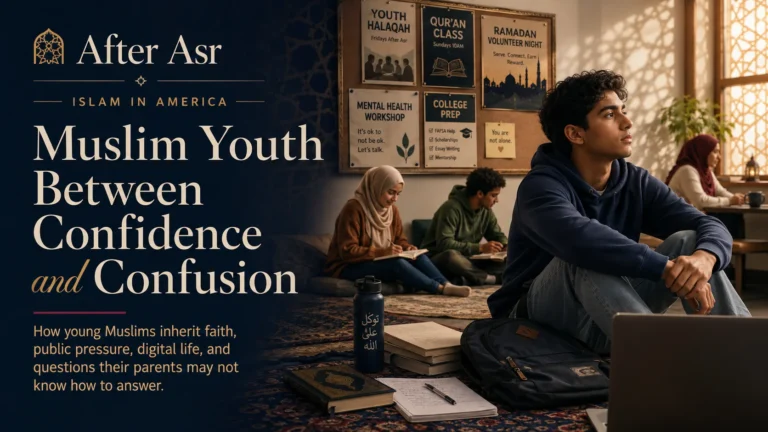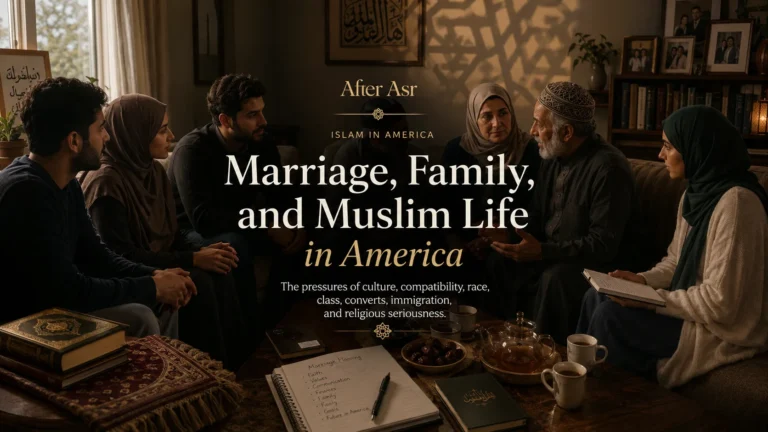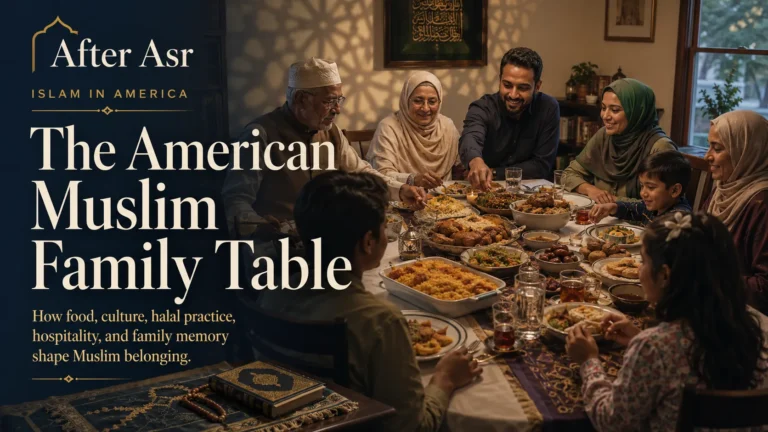
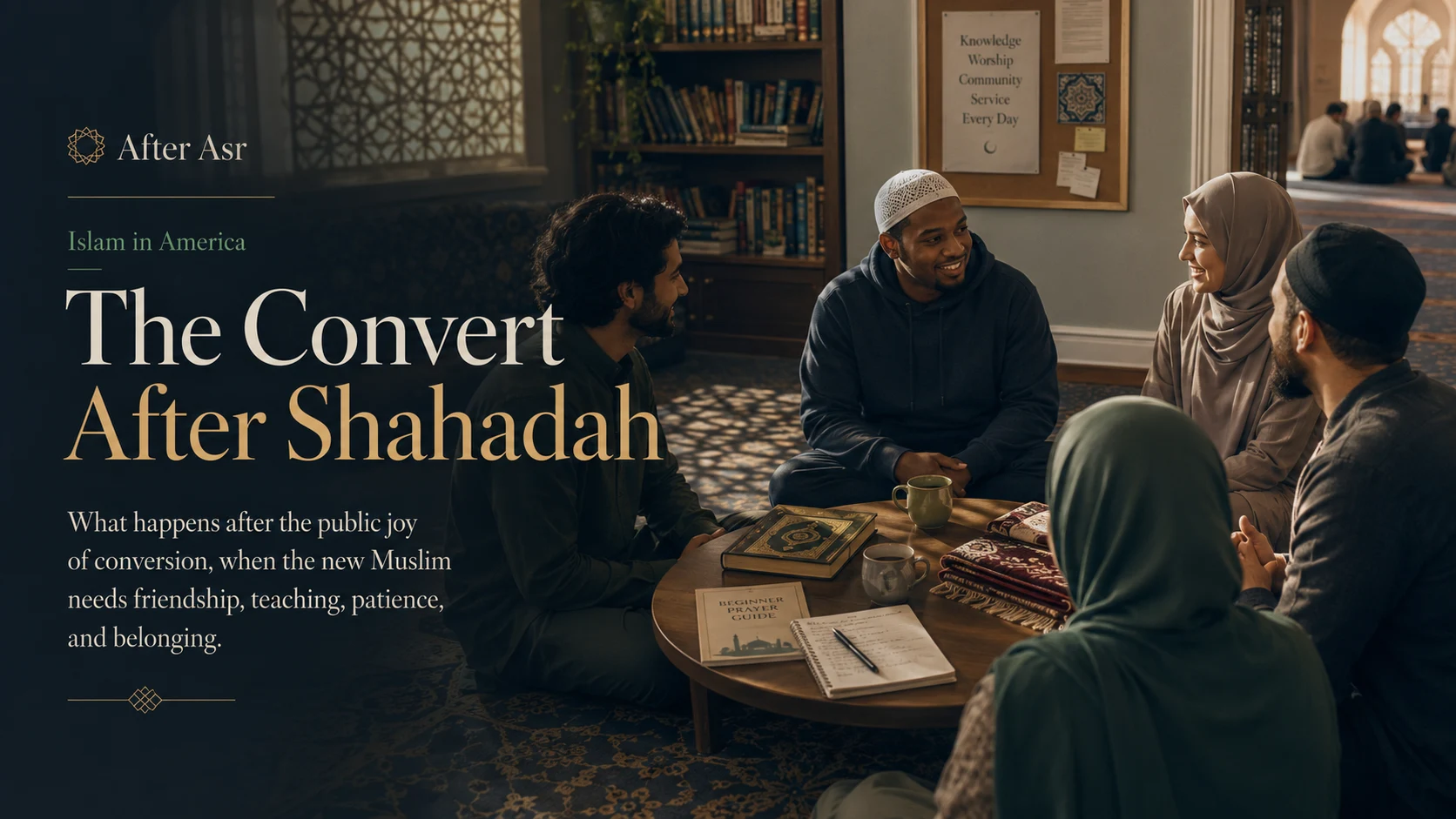
What happens after the public joy of conversion, when the new Muslim needs friendship, teaching, patience, and belonging.
There is a moment after the shahadah when the room feels lighter.
A person has just said the words that change the direction of a life. Ashhadu an la ilaha illa Allah, wa ashhadu anna Muhammadan rasul Allah. I bear witness that there is no god but Allah, and I bear witness that Muhammad is the Messenger of Allah. People smile. Some cry. Someone says takbir. Phones may be raised, though perhaps they should not always be. Sisters embrace a new sister. Brothers embrace a new brother. Someone brings a Qur’an. Someone says, “Welcome to Islam.” Someone else says, “All your sins are forgiven.” The convert is surrounded, celebrated, and seen.
It is a beautiful moment.
It is also only the beginning.
After the public joy comes the quieter life. The new Muslim goes home. They may return to a family that does not understand. They may wake the next morning unsure how to pray. They may have a job, school, children, roommates, old habits, non-Muslim relatives, financial stress, loneliness, and questions they do not yet know how to ask. They may have been embraced in the masjid, but not yet included in anyone’s weekly life. They may have entered Islam with certainty and still feel disoriented by the social world of Muslims.
This is where many communities fail without intending to.
They love the shahadah, but do not always know how to love the person after it.
Conversion is not a single emotional event. It is an entrance into worship, learning, community, identity, family tension, moral change, and lifelong return to Allah. The convert after shahadah needs more than applause. They need friendship, teaching, patience, protection from overwhelm, and a place to belong when the excitement fades.
A community that receives converts well has understood something essential about Islam in America. Islam here is not only inherited. It is chosen, entered, discovered, and rebuilt in lives that may not come with Muslim family structures. Converts are not guests in the ummah. They are part of its renewal.
The danger of treating conversion as a finish line
The shahadah is often treated as a climax.
For the convert, it may feel like the end of a long search. They may have studied Islam for months or years. They may have read the Qur’an privately, watched lectures, asked questions, compared religions, wrestled with doubt, prayed in secret, cried alone, or slowly realized that they already believed. Saying shahadah publicly can feel like finally stepping into the truth.
For the community, it can feel like a victory. A sign that Islam is beautiful. A reminder to born Muslims not to take guidance for granted. A moment of collective joy in a time when Muslims are often misrepresented. People need these reminders.
But if conversion is treated as the finish line, the community may disappear at the very moment the convert needs it most.
The new Muslim still needs to learn purification, prayer, basic belief, fasting, halal food, modesty, Islamic character, community etiquette, and how to seek knowledge. They need to understand what is obligatory now and what can be learned gradually. They need to know which questions require scholars and which questions can be answered by a trusted mentor. They need to learn how to handle family members who feel confused, hurt, or afraid. They need to know that becoming Muslim does not mean becoming instantly perfect.
The day after shahadah can be spiritually tender. A new Muslim may feel joyful, but also exposed. They may wonder whether they now have to change everything at once. They may fear doing something wrong. They may be flooded with advice from well-meaning Muslims. One person says change your name. Another says stop all holidays immediately. Another says learn Arabic. Another says find a spouse. Another says avoid certain groups. Another sends ten lectures. Another corrects their clothing before teaching them how to pray.
This can turn a mercy into a storm.
A wise community understands that shahadah opens a door. After that, someone must walk with the person through it.
Learning to pray
The first great need after shahadah is prayer.
Not every new Muslim knows this clearly. Some may know that Muslims pray five times a day, but not how. Some may have watched videos. Some may have attended Jumu’ah without understanding the movements. Some may have memorized al-Fatihah phonetically. Some may be terrified of making mistakes. Some may not know what wudu is. Some may not know prayer times, qiblah, what to say, what invalidates prayer, or what to do if they forget something.
This is not a small matter. Salah is the pillar of the believer’s daily life.
Communities should have a simple, merciful prayer pathway for every new Muslim. Not a vague instruction to “learn prayer,” but actual help. A printed guide. A video resource from a reliable source. A mentor who can demonstrate wudu and salah. A beginner class. Follow-up after one week, one month, and three months. Permission to learn gradually without being careless. Encouragement to begin standing before Allah even while still learning the Arabic.
Prayer should be taught as meeting Allah, not only as a technical performance.
Yes, the details matter. The body, words, times, purification, and direction matter. But the convert also needs to know that prayer is not an exam meant to expose them. It is a mercy that will form them. It is where they will bring confusion, loneliness, gratitude, repentance, and longing. It is where Islam moves from idea to daily submission.
A new Muslim who learns to pray early has been given a lifeline.
A community that celebrates shahadah but does not teach prayer has not completed its welcome.
Too much advice, not enough companionship
Many converts are overwhelmed not by hostility, but by excessive advice.
The advice often comes from love. Muslims are excited. They want to help. They remember something important and want the new Muslim to know it. They worry the convert will make mistakes. They want to protect them from confusion. But love without wisdom can become heavy.
A new Muslim may hear many voices at once:
“You need to follow this madhhab.”
“You should change your name.”
“You should dress like this.”
“You should stop talking to those friends.”
“You need to get married.”
“You should learn Arabic immediately.”
“You should not read that translation.”
“You should watch this scholar.”
“You should avoid that masjid.”
“You should move.”
“You should tell your family this way.”
Some of these suggestions may contain truth. Some may be premature. Some may be cultural. Some may be personal preference disguised as religious necessity. The convert, still new, may not know how to sort them. They may begin to feel that Islam is a maze of competing instructions.
What they often need first is companionship.
Someone to sit with them. Someone to answer slowly. Someone to say, “Let us focus on prayer first.” Someone to explain the difference between obligations and recommendations. Someone to tell them that learning takes time. Someone to protect them from being turned into a project for everyone’s opinions.
Companionship is not passive. It is one of the deepest forms of teaching. The convert watches how Muslims pray, speak, eat, visit, apologize, joke, give charity, attend Jumu’ah, and remember Allah. They learn Islam not only through lectures, but through being near people who live it with steadiness.
The new Muslim does not need everyone’s advice.
They need a few trustworthy people who will remain after the room stops clapping.
The convert as person, not proof
Converts are often used as proof.
Proof that Islam is beautiful. Proof that da’wah works. Proof that guidance can reach anyone. Proof that born Muslims should be more grateful. Proof that Islam is not ethnic. Proof that Americans can become Muslim. Proof that a mosque is active. Proof that the community is welcoming.
There is truth here. A convert’s shahadah can awaken hearts. It can remind Muslims that guidance is a gift, not an inheritance to take lightly. It can soften people who have grown numb. It can make the masjid feel alive.
But the convert is not a symbol first.
They are a human being.
They may have a complicated past. They may have family relationships still in pain. They may have old habits they are ashamed of. They may have children, debts, trauma, disabilities, mental health struggles, addiction history, loneliness, religious confusion, or fear. They may be entering Islam with deep certainty and still need years to reorder their life. They may not want to be recorded, photographed, interviewed, or asked to tell their story repeatedly.
Communities should ask before publicizing a shahadah. The moment is sacred. It should not automatically become content. A new Muslim may not understand the long-term implications of having their conversion shared publicly. They may not be ready for family members, employers, or strangers to see it. They may be overwhelmed by attention.
Even when a convert is comfortable sharing, their story should not become the only thing people know about them. The community should learn their name, interests, work, family needs, personality, humor, and hopes. They should be invited not only to speak, but to eat, learn, serve, rest, and grow.
The convert’s dignity is greater than their usefulness.
Family after conversion
For many converts, the hardest part of becoming Muslim is not the theology. It is family.
A mother may cry because she thinks she has lost her child. A father may become angry. A spouse may feel betrayed. Siblings may mock or avoid the subject. Grandparents may worry about salvation. Children may be confused. Non-Muslim relatives may assume the convert has joined something extreme, foreign, or hostile to family love. Some families are gentle and curious. Others are suspicious, hurt, or openly hostile.
The convert may feel torn.
They love Allah and know Islam is true. They may also love their family deeply. They may not want to hurt them. They may be grieving the loss of religious or cultural practices once shared. They may dread holidays. They may struggle to explain halal food, prayer, Ramadan, modesty, marriage expectations, and why they no longer participate in certain rituals. They may be accused of rejecting their upbringing, ethnicity, country, or loved ones.
Muslim communities must be careful here. Do not tell converts casually to cut off family. Do not treat non-Muslim relatives as enemies by default. Do not rush converts into harshness that Islam did not require. Do not minimize the pain of being misunderstood at home.
Islam honors family ties, while placing obedience to Allah above all. This balance requires knowledge and wisdom. A convert may need help learning how to be kind without compromising, how to decline certain practices respectfully, how to maintain contact, how to answer questions, how to endure emotional pressure, and how to protect themselves from real harm where necessary.
A convert should not have to navigate these tensions alone.
The community should provide mentors, classes, and guidance specifically on family life after conversion. Born Muslims often do not understand how painful it can be to become religiously unfamiliar to one’s own family. Converts need people who will listen without romanticizing their sacrifice.
Sometimes da’wah begins with a daughter still calling her mother gently.
Sometimes it begins with a son refusing pork at dinner without insulting the person who cooked.
Sometimes it begins with patience through years of misunderstanding.
The first Ramadan
The first Ramadan after shahadah can be unforgettable.
It may be the first time the convert wakes before dawn to eat for Allah. The first time hunger becomes worship. The first time sunset feels sacred. The first time the Qur’an is recited in long night prayers. The first time they say “Ramadan Mubarak” and feel that the month belongs to them too.
It can also be lonely.
If the convert has no Muslim family, suhoor may be eaten alone. If they do not know many people, iftar invitations may be inconsistent. Taraweeh may be beautiful but overwhelming. They may not understand what is being recited. They may not know where to sit, when to leave, what to do with children, how much to fast if they have health issues, or what to do when work becomes difficult.
The community often assumes that Ramadan gathers everyone automatically. It does not.
A new Muslim needs intentional Ramadan care. Invite them before the month begins. Explain the schedule. Teach them how to fast safely and correctly. Let them know about exemptions without making them feel weak. Sit with them during iftar. Help them understand taraweeh. Check on them halfway through the month, when the initial excitement fades. Make sure they have Eid plans before Eid morning arrives.
Eid can be especially painful for converts. The mosque is full of families, cultural clothing, children, photos, and private plans. The convert may pray Eid, smile, hug strangers, then return to an empty apartment. The day that should feel like belonging can reveal loneliness sharply.
No new Muslim should have to wonder whether anyone remembered them on Eid.
Islam and the old self
After conversion, many new Muslims struggle with the question of who they were before.
Some are told, beautifully, that previous sins have been forgiven. This is true and deeply merciful. But emotional memory does not always disappear immediately. A convert may still carry regret, shame, habits, relationships, tattoos, photos, family expectations, previous religious training, old friendships, past marriages, children from earlier relationships, or patterns of behavior that require time and support to change.
They may wonder: Am I supposed to hate everything about my old life? What parts can I keep? What must I leave? Who am I now? Am I allowed to still love my family’s traditions? What about old friends? What if I miss things that are not good for me? What if I feel like two people?
The answer requires care.
Islam does not ask a person to pretend they had no life before guidance. It asks them to submit their life to Allah. Some things from before must be left. Some must be purified. Some are neutral. Some may become gifts. A convert’s pre-Islamic compassion, work ethic, family loyalty, discipline, artistic ability, love of reading, service to others, or honesty may deepen after Islam. Their culture may contain good manners, foods, stories, and forms of neighborliness that can remain within Islamic limits.
But old sins should not become identity. Old wounds should not be carried alone. Old relationships may need new boundaries. Old habits may require gradual struggle.
A wise community does not demand that a convert become culturally unrecognizable overnight. Nor does it tell them that nothing needs to change. It helps them sort life patiently under the light of Islam.
Guidance is not the erasure of personhood.
It is the reorientation of the person toward Allah.
The pressure to become instantly knowledgeable
Converts are often assumed to be experts by non-Muslims and beginners by Muslims.
Both can be difficult.
Non-Muslim relatives and friends may ask them to explain Islam immediately. Why do Muslims pray like that? What about Jesus? What does Islam say about women? What about terrorism? What about heaven and hell? Why can’t you eat this? Why did you convert? The new Muslim may barely know how to pray and suddenly feel responsible for defending an entire religion.
Inside Muslim spaces, the convert may be treated as permanently new. People explain basic things repeatedly, sometimes long after the convert has learned. Their opinions may be dismissed because they “just converted.” Their questions may be answered as though they know nothing. Their sincerity may be praised while their growth is underestimated.
The convert needs room to learn without being frozen as a beginner.
In the early stage, they should be protected from having to answer every question. They can say, “I am still learning.” They can say, “Let me ask someone more knowledgeable.” They can say, “I can tell you why I became Muslim, but I cannot answer everything.” This is not weakness. It is honesty.
Over time, converts may become teachers, scholars, organizers, chaplains, parents, mentors, and community leaders. Many have done so throughout American Muslim history. Communities should nurture this growth. The convert who needed a prayer booklet today may teach others tomorrow, if Allah wills.
Do not rush them into authority.
Do not trap them outside it forever.
Culture shock inside the ummah
Many converts enter Islam expecting a united Muslim community. Then they meet Muslims.
They discover ethnicity, language groups, madhhab debates, mosque politics, marriage preferences, cultural food expectations, immigrant nostalgia, racial tensions, gender debates, fundraising arguments, leadership conflicts, and different opinions on almost everything. They may be confused. Some may ask, “If Islam is true, why are Muslims like this?”
This is a painful but necessary distinction: Islam is perfect, Muslims are not.
The convert should be taught early that the ummah is beautiful and wounded, vast and human. Muslims come from many cultures, classes, histories, and levels of knowledge. Some will be kind. Some will be harsh. Some will guide. Some will confuse. Some will inspire. Some will disappoint. The behavior of Muslims matters, but it does not determine the truth of Islam.
This lesson should not be used to dismiss harm. If a convert experiences racism, exploitation, neglect, or spiritual abuse, the community should not say, “Do not judge Islam by Muslims,” as a way of avoiding accountability. The statement is true, but it can be misused. The fuller response is: Islam is not to blame for this wrongdoing, and Muslims must correct it because Islam demands justice.
Converts need mentors who can help them navigate Muslim culture without becoming cynical. They need to understand legitimate difference, unreliable advice, cultural habits, and how to find trustworthy knowledge. They need to learn that unity does not mean sameness, and community does not mean perfection.
Belonging to the ummah means joining a family that is sacred in bond, but still in need of repentance.
Race and the convert experience
Conversion in America is shaped by race, whether communities admit it or not.
A Black convert may enter Islam and find a long Black Muslim legacy that affirms them, or they may enter an immigrant-dominated mosque where Black Muslim history is barely mentioned and anti-Black assumptions linger. A white convert may be treated with fascination, sometimes excessive praise, because their conversion disrupts public stereotypes of Islam. A Latino convert may find limited language support or feel invisible in Arab or South Asian spaces. An Asian American convert may encounter assumptions about ethnicity and religion that do not fit them. Converts from Indigenous, Caribbean, African American, white Southern, Appalachian, or other backgrounds may each bring histories that the mosque does not know how to receive.
Not all converts are treated the same.
Some are idealized. Some are ignored. Some are exoticized. Some are viewed with suspicion. Some are pushed toward certain marriage prospects because of race. Some are praised publicly but excluded socially. Some enter Islam and immediately encounter racial hierarchies that contradict what they learned about the equality of believers.
This can be spiritually damaging.
Muslim communities must not pretend that conversion erases race. Islam gives a higher bond than race, but Muslims must still confront racism in how they receive people. A convert should not have to become culturally Arab, South Asian, Somali, Turkish, or anything else to belong. A Black convert should not have to remind the community that Black Muslims are foundational to American Islam. A white convert should not be treated as a trophy. A Latino convert should not be invisible until the community wants to discuss da’wah growth.
The shahadah makes a person Muslim.
The community’s responsibility is to receive them without making their race a burden or a spectacle.
Marriage after shahadah
Marriage can become complicated for converts quickly.
Some Muslims suggest marriage as a solution to loneliness, desire, family instability, or lack of community. In some cases, marriage can bring support and stability. But it can also create vulnerability if rushed. A new Muslim may not yet know Islamic rights, red flags, family expectations, mahr, wali issues, divorce rules, cultural differences, or how to distinguish sincere interest from exploitation.
Convert women are especially vulnerable to men who romanticize them, pursue them secretly, or present themselves as guides while seeking control. Convert men may struggle to be accepted by Muslim families or may feel pressure to prove religious seriousness quickly. Converts of all backgrounds may be seen as easier to influence because they lack Muslim family advocates.
Communities must protect converts in marriage.
This means teaching them before they enter serious processes. It means ensuring they have mentors and advocates. It means explaining wali, mahr, rights, responsibilities, finances, religious expectations, family boundaries, and warning signs. It means not pushing them toward marriage simply because they are lonely. It means not treating them as less desirable because they lack Muslim lineage. It means holding born Muslims accountable for how they approach them.
A convert should never have to choose between loneliness and an unsafe marriage.
The community must become family enough to protect them while they learn what family in Islam means.
The loneliness no one sees
Some converts disappear quietly.
They do not announce that they are leaving the community. They simply stop coming. The first few weeks after shahadah were full of attention, then the messages slowed. They missed a class, then another. Ramadan ended. Eid passed. Work became busy. Family pressure increased. Prayer felt hard. They made mistakes and felt ashamed. They did not know who to call. They assumed the community had moved on.
Sometimes people later ask, “What happened to that brother?” or “Where did that sister go?”
The answer may be that no one followed.
Loneliness is one of the greatest dangers for converts. It can make Islam feel intellectually true but socially unbearable. Human beings need companionship. The early Muslims had one another. A new Muslim in America may have no Muslim family, no Muslim roommate, no Muslim spouse, no Muslim coworker, and no local community beyond a mosque where people are friendly but busy.
We should not underestimate how hard this is.
A convert may spend Friday night alone while Muslim families gather privately. They may break fast alone while the mosque assumes everyone has plans. They may sit at Eid prayer surrounded by families, then go home with no one. They may be afraid to ask basic questions because they do not want to seem needy. They may be embarrassed that the joy of conversion did not remove sadness.
Friendship is not optional in convert care. It is central.
Not every person can mentor. Not every family can host often. But every community can build systems so that new Muslims are not dependent on chance kindness. Assign mentors. Create small circles. Invite consistently. Check in. Notice absence. Follow up after Ramadan. Include converts in ordinary life, not only special programs.
The convert needs to be wanted when there is no audience.
Teaching with patience
The Prophet ﷺ taught people according to their capacity. Communities must recover this wisdom.
A new Muslim does not need every ruling at once. They need foundations. Tawheed. Prayer. Purification. The Prophet ﷺ. Qur’an. Basic halal and haram. Character. Repentance. Community. Gradual growth. They need to know what is urgent and what can wait. They need to know that Islam is complete, but learning Islam takes time.
Some Muslims fear that patience means watering down the religion. It does not. Patience is not dilution. It is pedagogy. Teaching someone to walk before asking them to run is not compromise. It is mercy.
This does not mean hiding obligations forever. It means ordering them wisely. A person who has just become Muslim should be called to prayer, but not crushed because they cannot yet recite perfectly. They should be taught halal, but not overwhelmed with ingredient panic before they understand worship. They should be guided toward modesty, but not humiliated for clothing they wore before they knew. They should be warned against sin, but also taught repentance.
Patience protects the heart.
Communities should train convert mentors in this. Not every enthusiastic Muslim knows how to teach a beginner. A mentor must know when to answer, when to refer to a scholar, when to listen, when to slow down, and when to encourage. They should not project their own cultural anxieties onto the convert. They should not turn the convert into a mirror for their own zeal.
The goal is not to make the convert dependent on the mentor.
The goal is to help the convert become rooted in Allah, connected to knowledge, and integrated into the community.
When the spiritual high fades
Many converts experience an early sweetness after shahadah. Prayer feels powerful. The Qur’an feels direct. The community feels new. Every lesson opens a door. Life seems clearer.
Then, at some point, the sweetness may fade.
Prayer becomes difficult. Old habits return. Family tension weighs heavily. Community disappointments appear. The convert sees Muslims arguing. Ramadan feels harder than expected. Questions become more complicated. The first emotional intensity gives way to ordinary discipline.
This stage can frighten a new Muslim. They may think something is wrong with them. They may wonder whether their conversion was sincere. They may feel ashamed that worship no longer feels effortless.
Communities should prepare converts for this.
Faith has states. The path includes sweetness and dryness, ease and struggle, clarity and confusion, closeness and effort. The fading of an emotional high is not proof that guidance has disappeared. It may be the beginning of deeper worship, where the person learns to pray because Allah is worthy, not only because they feel inspired.
Born Muslims need this reminder too, but converts may need it urgently because they sometimes expect the new life to feel consistently luminous.
A mentor can say, “This is normal. Keep praying. Keep learning. Do not isolate. Talk to Allah. Come back even if you feel distant.” These words can protect a person from despair.
The goal is not to chase the first feeling forever.
The goal is istiqamah, steadiness.
The role of born Muslims
Born Muslims often do not realize how much they know without knowing they know it.
They know how to enter a mosque, when to stand in prayer, how Ramadan feels, what Eid usually involves, what phrases mean, how Muslim families interact, what foods are common, which topics are sensitive, how to find halal meat, how to greet elders, and how to interpret mosque announcements. Much of this knowledge was absorbed through family and community, not formal teaching.
Converts do not automatically have this map.
Born Muslims can help by becoming conscious of what they inherited. Explain without condescension. Invite without overwhelming. Do not laugh at basic questions. Do not assume the convert knows what wudu is, what taraweeh is, what a janazah is, what “iftar” means, or why everyone seems to have an opinion about moon sighting. Do not make cultural habits seem religiously mandatory. Do not treat the convert as fragile, but do not abandon them to guess.
Born Muslims should also learn from converts. Converts often remind the community of the power of guidance. They ask questions that reveal confusion. They distinguish Islam from culture because they did not inherit the culture. They can explain Islam in American language. Their sincerity can awaken gratitude. Their struggles can expose gaps in community care.
The relationship should not be one-directional. Converts need support, and born Muslims need renewal. Allah may use each to benefit the other.
The mosque that knows what happens next
A mature mosque has a plan for what happens after shahadah.
Not a bureaucratic plan that makes the person feel processed, but a compassionate pathway. Who follows up? Who teaches prayer? Who offers beginner classes? Who checks on family challenges? Who invites them for meals? Who explains Ramadan? Who helps them find reliable resources? Who protects them from overwhelming advice? Who connects them to community without forcing them into public attention? Who notices if they disappear?
This requires organization.
A convert care team. Men and women mentors. Clear beginner curriculum. Regular classes. Private support. Social gatherings that are not overwhelming. Eid and Ramadan planning. Access to scholars. Partnerships with local families. Guidelines for public shahadah recordings. Marriage support. Mental health referrals where needed. Awareness of race, class, disability, and family realities.
Some communities are small and cannot build elaborate systems. But every community can do something. Even one trustworthy mentor and one monthly beginner gathering can matter. Even a shared meal schedule can matter. Even a text after Jumu’ah can matter.
Convert care should not depend on the personality of whoever happened to be present on the day of shahadah. It should be part of the mosque’s understanding of itself.
A masjid that welcomes people into Islam should be ready to walk with them afterward.
Belonging beyond the beginner stage
One of the overlooked challenges for converts is what happens after they are no longer new.
At first, everyone understands that they need support. After a few years, assumptions change. They are expected to know. They may be asked to mentor others. They may marry, have children, move communities, or become active in service. Yet they may still carry family loneliness, cultural displacement, or gaps in knowledge. They may still feel outside ethnic circles. They may still experience Eid differently from born Muslims. They may still be learning how to raise Muslim children without having been raised Muslim themselves.
Belonging must continue beyond the beginner stage.
A convert who has been Muslim for ten years may still need community. A convert parent may need help creating Ramadan traditions for children. A convert elder may need care if they have no Muslim relatives. A convert who becomes knowledgeable should be respected, not permanently treated as someone who “just converted.” A convert who struggles after years should not be treated as a disappointment.
Islam is lifelong. So is belonging.
Communities should make room for converts as full members: teachers, board members, mentors, scholars, parents, volunteers, donors, organizers, and elders. Not because they are converts, but because they are Muslims with gifts, knowledge, and responsibility.
The goal of convert care is not to keep converts in a separate category forever. It is to help them enter the community fully while honoring the specific realities they may carry.
The convert as mercy to the community
A convert is often described as someone receiving mercy, and this is true. Guidance to Islam is a mercy beyond measure.
But converts can also be a mercy to the community.
They remind born Muslims that Islam is not merely inherited. They ask why things are done. They reveal when culture has been confused with religion. They expose weaknesses in teaching. They bring new languages, family stories, regional backgrounds, professional skills, and forms of courage. They expand the imagination of what an American Muslim can look like. They challenge ethnic ownership of the masjid. They force communities to explain Islam clearly.
This can be uncomfortable. It is also necessary.
A community that receives converts well becomes less tribal. It becomes more intentional. It becomes clearer about essentials. It becomes more aware of social exclusion. It becomes more grateful for prayer, Qur’an, Ramadan, and the Prophet ﷺ. It becomes more American in the best sense, not diluted, but able to carry Islam across backgrounds.
Converts should not be burdened with reforming the community. That is not their job. But their presence often reveals where reform is needed.
When Allah sends someone to the masjid through shahadah, the question is not only whether that person will grow.
It is whether the community will grow enough to receive them.
After the applause
After the shahadah, after the hugs, after the smiles, after the takbir, after the new Muslim goes home, Islam continues.
It continues in the first awkward wudu.
The first prayer recited from a paper.
The first conversation with a worried parent.
The first time declining food that is not halal.
The first Ramadan headache.
The first Eid alone, or the first Eid truly included.
The first mistake after conversion and the fear that one has failed too soon.
The first moment of sujood when no one is watching.
The first friendship that feels like family.
The first time the convert realizes they are not only entering a religion, but a people.
This is where the community’s welcome is tested.
Not in whether it can celebrate guidance publicly, but in whether it can nurture faith privately. Not in whether it can say “welcome to Islam,” but in whether it can make that welcome livable after the crowd leaves. Not in whether it can love the idea of converts, but in whether it can love the convert who needs rides, answers, meals, patience, correction, and time.
The convert after shahadah is not a project.
Not a trophy.
Not a symbol.
Not a guest.
Not a permanent beginner.
Not an inspiring story to retell when the community needs to feel good about itself.
The convert is a Muslim, a servant of Allah, a member of the ummah, and a trust placed before the community.
If we understand that, then the joy of shahadah will not end in the room where it was spoken. It will continue in teaching, friendship, family, prayer, Ramadan tables, Eid mornings, quiet check-ins, and years of shared worship.
A person entered Islam with words.
Now the community must help them live those words with mercy.