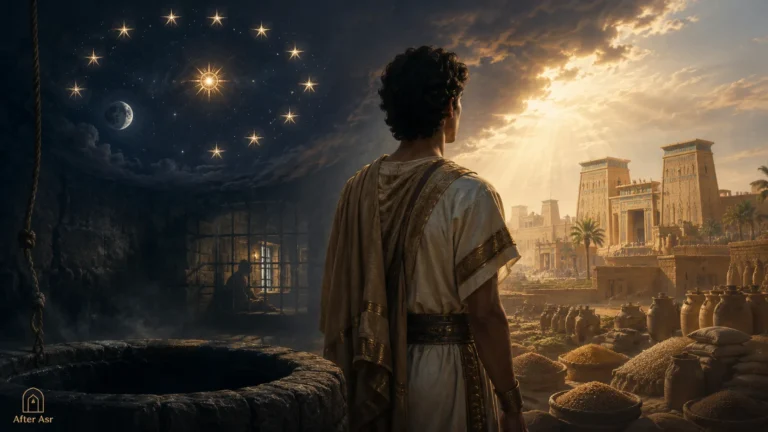

How the Quran teaches courage, patience, and reliance through one of its most repeated lives.
The story of Musa, peace be upon him, is one of the most frequently returned-to stories in the Quran. This repetition is not accidental. Musa’s life gathers many of the central struggles of human existence: fear, oppression, exile, calling, confrontation with power, leadership, public rejection, communal disappointment, patience, anger, reliance, and the long difficulty of guiding people who are not always ready to be guided. His story is not a simple tale of a prophet triumphing over a tyrant. It is a layered account of what it means to carry responsibility under pressure.
The Quran does not present Musa as a distant symbol of effortless strength. It shows him afraid, fleeing, praying, asking for help, speaking honestly about his limits, confronting Pharaoh, enduring the weakness of his people, and continuing in obedience through repeated difficulty. This makes his story deeply human without diminishing his prophetic rank. The greatness of Musa is not that struggle never touched him. His greatness is that struggle did not turn him away from Allah.
For this reason, Musa’s story speaks to believers in many conditions. It speaks to the oppressed who wonder whether arrogance will ever fall. It speaks to those called to responsibility before they feel ready. It speaks to those who fear public confrontation. It speaks to leaders exhausted by the people they serve. It speaks to communities waiting for relief. It speaks to anyone who has learned that faith does not remove struggle from life, but gives struggle direction, meaning, and reliance.
Musa Is Born Into Oppression
Musa’s story begins in a world shaped by tyranny. Pharaoh is not merely a cruel ruler. He represents the kind of power that becomes intoxicated with itself. He divides people, humiliates a population, kills their sons, spares their women, and treats human life as something subject to his political fear. His authority is built on domination, surveillance, and the belief that he can control destiny through violence.
The birth of Musa takes place inside this atmosphere. This matters because the Quran does not begin his story in comfort. The one who will confront Pharaoh is born under Pharaoh’s threat. The child who will become a means of deliverance is, at first, among the most vulnerable. This is one of the Quran’s profound reversals: Allah brings the undoing of tyranny through what tyranny considers weak.
The mother of Musa is commanded to place him into the river. Few images are more painful than a mother releasing her child into water because keeping him openly may mean his death. Yet this moment contains reliance of the highest order. She acts, but the outcome is beyond her. She obeys, but her heart is tested. She lets go, but not into emptiness. She lets go under the command and promise of Allah.
This beginning teaches that struggle often begins before a person understands the story they are inside. Musa is not yet speaking, leading, or confronting. He is being carried by Allah’s decree through danger. Long before Musa knows his mission, Allah is already preserving him for it.
Allah’s Plan Moves Through What People Fear
Pharaoh tries to prevent the rise of a threat, yet Musa is brought into Pharaoh’s own household. This is not simply dramatic irony. It is a theological lesson. The tyrant plans, but Allah plans. The powerful calculate, but their control is limited. What they fear may enter through the very doors they believe they have secured.
The Quran repeatedly teaches that worldly power is never absolute. Pharaoh controls soldiers, policies, punishment, and public fear, but he does not control Allah’s decree. He can command death, but he cannot prevent life when Allah wills it. He can build a system around oppression, but he cannot see how that system will contain the seeds of its own collapse.
This matters for every age. Oppression often appears permanent while people are living under it. Institutions seem too strong. Tyrants seem too protected. Falsehood seems too organized. The oppressed may wonder whether anything can change. Musa’s early life teaches that Allah’s plan may already be moving in places hidden from public view.
The believer is not asked to pretend tyranny is weak. Pharaoh was not weak in worldly terms. The believer is asked to remember that even the strongest worldly power remains weak before Allah.
Musa’s Flight and the Formation of Character
Before Musa is sent as a messenger to Pharaoh, he experiences fear, danger, and exile. After an incident in Egypt, he leaves the city afraid and watchful. This is an important part of his story because it shows that prophetic preparation does not always look like obvious success. Sometimes preparation looks like displacement. Sometimes it looks like leaving what is familiar. Sometimes it looks like being stripped of status, security, and control.
Musa travels to Madyan and enters another stage of life. There, we see him helping two women at the well, then turning to Allah in need. This moment reveals something essential about his character. Even while vulnerable, he acts with integrity. Even while displaced, he serves. Even while in need, he does not abandon moral responsibility.
His dua after helping them is one of the most beautiful expressions of poverty before Allah. Musa does not present himself as self-sufficient. He does not pretend strength he does not have. He turns to Allah as one in need of whatever good his Lord sends down.
This is Quranic strength. It is not the denial of need. It is the confession of need before the One who provides.
The Call Comes Before Musa Feels Ready
When Musa is called by Allah at the sacred valley, his life changes. He is given a mission greater than anything he could have assigned to himself: go to Pharaoh. The command is direct, and the task is immense. Musa is not being sent to a harmless discussion. He is being sent to the center of political arrogance and spiritual rebellion.
His response is deeply instructive. Musa does not boast. He does not perform confidence. He speaks honestly about his fear, his concern about being rejected, his speech, and his need for support. He asks Allah to expand his chest, ease his task, loosen the knot from his tongue, and appoint Harun, peace be upon him, as a helper from his family.
This is one of the Quran’s most important lessons about calling and responsibility. Being chosen for a task does not mean a person feels naturally prepared for it. A believer may be given responsibility that exposes their limitations. They may know the truth of a command while still feeling fear. They may obey while asking Allah for help.
Musa teaches that courage is not pretending to be fearless. Courage is carrying fear into obedience.
The Need for Help Is Not Weakness
Musa’s request for Harun is significant. He does not imagine that needing support invalidates his mission. He asks for help because the task is heavy. In this, the Quran gives a realistic view of responsibility. Some struggles are not meant to be carried alone.
The modern world often glorifies the solitary hero, the self-made leader, the individual who needs no one. The Quranic picture is different. Even prophets are shown asking for support, relying upon Allah, and working with others. Musa’s need for Harun does not make him lesser. It shows wisdom, humility, and clarity about the mission.
This has implications for Muslim life. A person working for good should not confuse isolation with sincerity. A parent, teacher, community worker, leader, activist, student, or caller to Islam may need help. They may need counsel, companionship, correction, and emotional support. Struggle becomes more dangerous when pride prevents a person from admitting need.
Musa’s dua teaches us to ask Allah not only for strength, but for the right support in carrying what He has placed upon us.
Speaking Truth to Power
The confrontation between Musa and Pharaoh is one of the Quran’s most powerful accounts of truth standing before power. Pharaoh represents arrogance that has become political, spiritual, and psychological. He does not merely rule people. He claims a kind of ultimate authority over them. His power depends not only on force, but on controlling the imagination of the people beneath him.
Musa comes with signs and a message: release the Children of Israel, recognize the Lord of the worlds, abandon arrogance, and submit to truth. This is not a private spiritual conversation. It is a challenge to a system built on oppression.
Yet Allah commands Musa and Harun to speak gently to Pharaoh. This is a profound instruction. Gentleness here is not weakness. It is disciplined obedience. The one who speaks for Allah does not let the evil of the listener determine the ethics of the message. Even before Pharaoh, the messengers are not permitted to become reckless, vulgar, or uncontrolled.
This does not make the message soft in content. Musa does not flatter Pharaoh’s falsehood. He confronts him with truth. But the Quran teaches that truth must be carried with the character Allah commands, not merely with the anger the situation provokes.
Pharaoh’s Arrogance and the Politics of Denial
Pharaoh’s response reveals the anatomy of arrogance. He mocks, questions, threatens, manipulates public opinion, and reframes Musa as a danger to the social order. This is familiar. Tyranny rarely describes itself as tyranny. It claims to protect the people from chaos. It portrays truth-tellers as threats. It uses fear to make oppression look necessary.
Pharaoh also attacks Musa personally. He reminds him of his upbringing in the palace and the incident from his past. This is another common tactic of power: avoid the truth of the message by attacking the messenger. If the messenger can be discredited, the demand for justice can be ignored.
Musa does not allow the conversation to be controlled by Pharaoh’s framing. He acknowledges what must be acknowledged, but returns the issue to Allah, truth, and oppression. This is important. The believer must not let falsehood decide the terms of moral discussion. Power often tries to make the oppressed justify their right to speak, while the oppressor avoids answering for oppression itself.
The Quran teaches us to see through such tactics.
The Magicians and the Courage to Change
The scene with the magicians is one of the most dramatic reversals in Musa’s story. Pharaoh gathers them to defeat Musa publicly. They come seeking reward and proximity to power. At first, they represent the machinery of spectacle used by tyranny to preserve its image. Then they witness the truth and fall in prostration.
Their transformation is immediate and costly. Pharaoh threatens them with torture and death, but they refuse to return to falsehood. In one moment, they move from serving power to defying it. Their courage exposes the fragility of Pharaoh’s authority. He can threaten their bodies, but he can no longer command their hearts.
This moment teaches that guidance can overturn a lifetime in an instant when the heart recognizes truth. It also teaches that real faith may require losing what one previously sought. The magicians began the day wanting Pharaoh’s reward. They ended it choosing Allah over Pharaoh’s punishment.
Their story is a reminder that people are not fixed in the roles they occupy today. A servant of falsehood can become a witness to truth. A person close to power can break from it. A heart can change quickly when Allah opens it.
The Sea and the Moment of No Visible Exit
One of the most powerful moments in Musa’s story comes when the Children of Israel reach the sea with Pharaoh’s forces behind them. From a worldly perspective, there is no exit. The enemy is approaching, the sea is ahead, and panic spreads. The people say they are overtaken.
Musa responds with certainty: his Lord is with him and will guide him.
This is not optimism based on visible circumstances. The visible circumstances are terrible. It is reliance based on Allah. The sea has not yet parted when Musa speaks. The path has not yet appeared. The rescue is not yet visible. This is precisely why the moment matters. Tawakkul is most clearly revealed when the means are not yet visible.
Then Allah opens a way through the sea.
The story teaches that Allah can create exits where human beings see only endings. This does not mean every hardship will be resolved in the exact way a person imagines. It means the believer must not reduce possibility to what is visible. Allah’s command is not limited by the apparent boundaries of a situation.
The sea is a symbol of impossible closure.
For Allah, it becomes a road.
Deliverance Does Not End the Struggle
A shallow reading might assume that once Pharaoh is defeated, the story becomes easy. The Quran shows otherwise. Deliverance from oppression is not the end of struggle. It is the beginning of new responsibilities.
The Children of Israel are rescued, but they still must learn gratitude, obedience, patience, and trust. They have left Pharaoh physically, but traces of fear, dependency, complaint, and spiritual weakness remain. This is one of the Quran’s most realistic teachings about liberation. A people can be freed from external domination while still needing internal reform.
This applies at individual and communal levels. A person may leave a harmful environment but still carry habits formed inside it. A community may escape an oppressor but still struggle with the mentality oppression produced. A sinner may abandon a sin but still need to rebuild the heart around obedience. Relief is real, but relief does not automatically complete purification.
Musa’s struggle after the sea teaches that guiding people is often harder than confronting enemies. A tyrant may be defeated in a moment by Allah’s command, but the reform of a community may require long patience.
The Burden of Leadership
Musa’s leadership over his people is filled with difficulty. They complain, hesitate, demand, forget, and at times display astonishing weakness after witnessing extraordinary signs. This part of the story is deeply important because it reveals the burden of spiritual leadership. A leader may love their people and still be hurt by them. They may serve them and still be resisted. They may guide them and still watch them fall into old patterns.
Musa’s frustration is human, but his mission continues. He carries the burden of a people who are not always grateful for what they have been given. His story is therefore a comfort to anyone who serves others and becomes exhausted by their inconsistency: parents, teachers, imams, community workers, mentors, and reformers.
The Quran does not romanticize leadership. It shows that leadership is not merely being admired, followed, or obeyed. It is carrying people through fear, weakness, complaint, and immaturity while remaining accountable to Allah. It requires patience, firmness, mercy, and the ability to continue even when appreciation is absent.
Struggle With the Self
Musa’s story is not only about external enemies. It also includes inward struggle. Fear, anger, grief, urgency, and frustration all appear in the broader Quranic portrayal of his life. This matters because the struggle of a believer is never only against Pharaoh outside. There is also a struggle inside the self.
A person may oppose injustice publicly while needing to purify anger privately. They may call others to patience while struggling with impatience. They may lead others while fearing failure. They may know Allah’s promise while still feeling the heaviness of the path.
The Quran’s portrayal of Musa allows us to understand that prophetic strength is not emotional emptiness. Strength is the submission of emotion to Allah. Musa feels deeply, but his life remains directed by revelation. His emotions are real, but they do not become gods.
This gives believers a mature model. Faith does not mean becoming numb. It means bringing fear, anger, sadness, and urgency under the guidance of Allah.
The Meeting With Khidr and the Limits of Human Understanding
The story of Musa and Khidr, peace be upon them, adds another dimension to the theme of struggle: the struggle with not understanding. Musa, a great prophet, encounters events that appear troubling, even wrong, from the perspective available to him. He objects because he cares about justice and truth. Yet he is taught that Allah’s wisdom may include realities hidden from immediate view.
This story must be approached carefully. It is not a license for people to excuse injustice by claiming hidden wisdom. Human beings are still commanded to act according to revealed guidance and moral responsibility. But the story does teach humility before the limits of human perception. Not everything Allah decrees will be understandable at first sight.
This is one of the hardest struggles for believers. We want life to explain itself quickly. We want pain to declare its purpose. We want delays to reveal their wisdom immediately. We want losses to justify themselves. Often, they do not. The story teaches that human knowledge is partial. Even righteous concern does not equal complete vision.
Musa’s meeting with Khidr reminds us that part of struggle is learning to trust Allah beyond what we can presently interpret.
Musa and the Need for Patience
If one word could gather much of Musa’s story, it would be patience. Patience before Pharaoh. Patience with fear. Patience with his people. Patience with delay. Patience with misunderstanding. Patience with responsibility. Patience with the limits of human control.
Quranic patience is not passivity. Musa acts, speaks, travels, confronts, leads, prays, and continues. His patience is active obedience under pressure. He does not sit still and call inaction trust. Nor does he act recklessly and call impatience courage. His patience is disciplined by Allah’s command.
This is the kind of patience believers need. Not the patience of resignation to falsehood, and not the impatience of uncontrolled reaction. The patience of Musa is the patience of someone who remains on mission when the path is hard, when people disappoint, when power threatens, and when the outcome is not yet visible.
Struggle as a Sign of Mission, Not Abandonment
One of the great lessons of Musa’s life is that struggle does not mean Allah has abandoned the servant. In fact, struggle may accompany mission. Musa is chosen, yet he faces fear. He is supported, yet he confronts Pharaoh. He is guided, yet he carries a difficult people. He is beloved to Allah, yet his life is not easy.
This corrects a common misunderstanding. Some people assume that if Allah is pleased with someone, their path should be smooth. The Quran does not teach this. The prophets are the best of people, and they endured some of the greatest trials. Ease is not the only sign of favor, and hardship is not proof of rejection.
For believers, this is both sobering and comforting. Sobering because faith does not promise a life without struggle. Comforting because struggle does not mean one is outside Allah’s care. The question is not whether struggle exists. The question is whether struggle is met with reliance, obedience, repentance, and patience.
Conclusion
The story of Musa and struggle is one of the Quran’s great mirrors for human life. Through Musa, peace be upon him, we see the struggle of the vulnerable child preserved by Allah, the exile in need of provision, the servant called before he feels ready, the prophet confronting tyranny, the leader carrying a difficult people, the believer standing before the sea with no visible exit, and the learner humbled before wisdom he cannot fully see.
Musa’s story teaches that courage is not the absence of fear, leadership is not the absence of frustration, reliance is not the absence of effort, and faith is not the absence of hardship. Struggle is part of the path. What matters is whether struggle drives the servant away from Allah or back toward Him.
The Quran returns to Musa again and again because human beings return again and again to fear, oppression, impatience, complaint, responsibility, and uncertainty. His story tells the oppressed that Pharaoh does not own the future. It tells the fearful that Allah can strengthen the one who feels inadequate. It tells the caller to truth that rejection is not proof of failure. It tells the leader that patience is part of service. It tells every believer that when the sea is ahead and the enemy behind, Allah can open a road no one else can see.
Musa struggled.
Musa relied.
Musa continued.
And through his story, the Quran teaches us that the path to Allah is not always easy, but it is never outside His knowledge, His command, or His mercy.